INDIGENOUS PAVILLION @MALOOP
Status: completed
Location: Phnom Penh, Cambodia
Year: 2026
Client: Maloop Garden
Scope of service: Designer and Workshop coordinator
Location: Phnom Penh, Cambodia
Year: 2026
Client: Maloop Garden
Scope of service: Designer and Workshop coordinator
Photo by Marion Girard
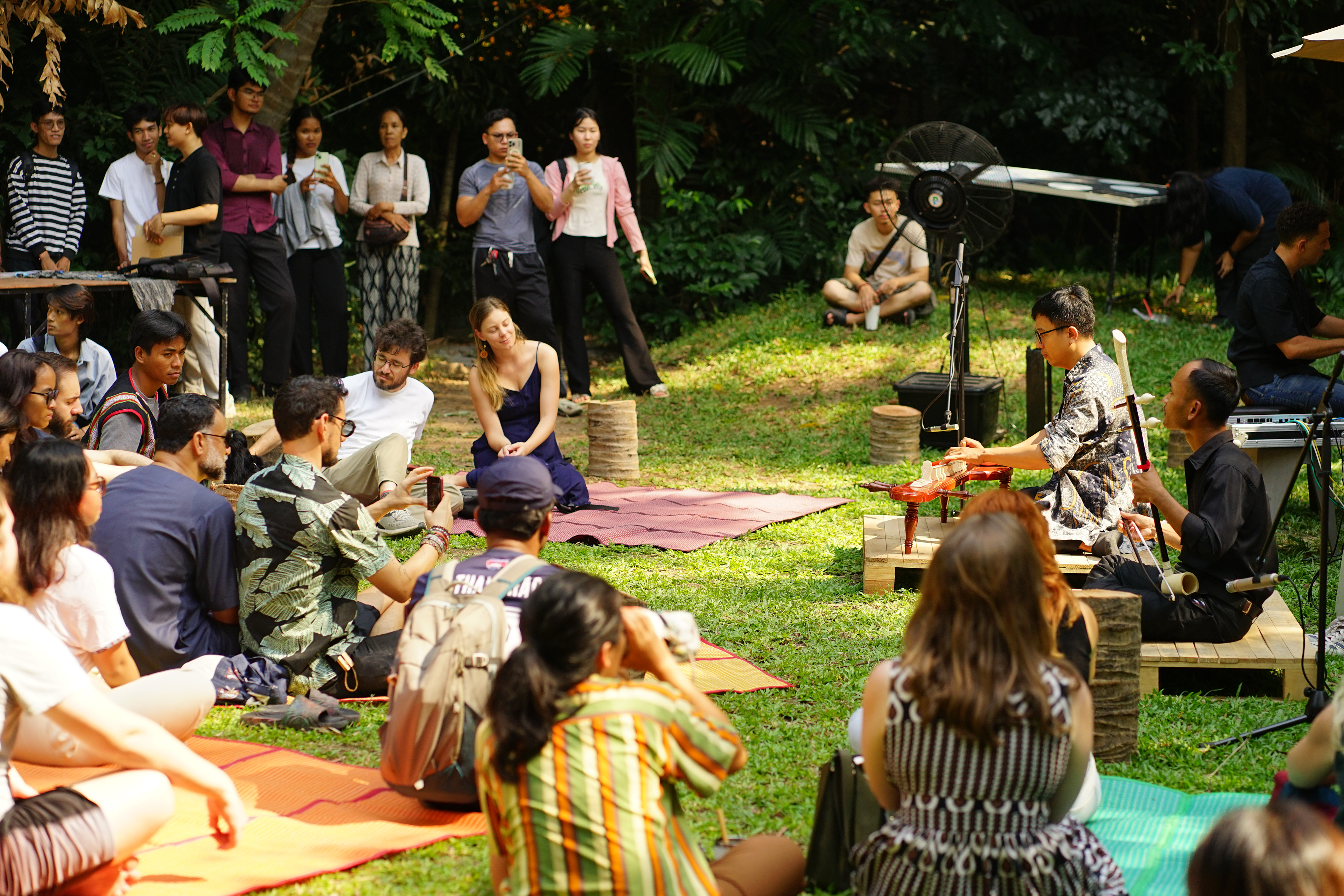
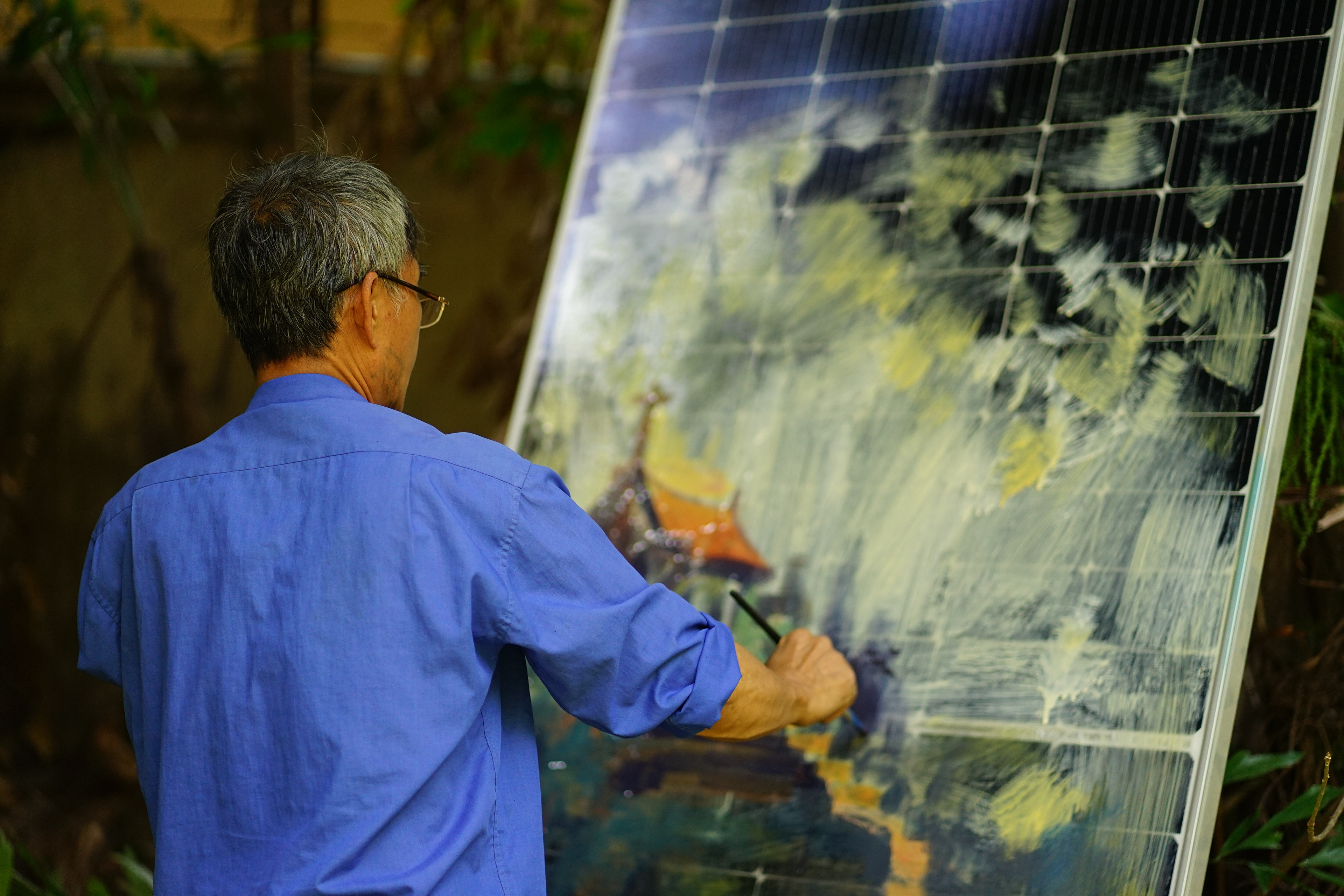
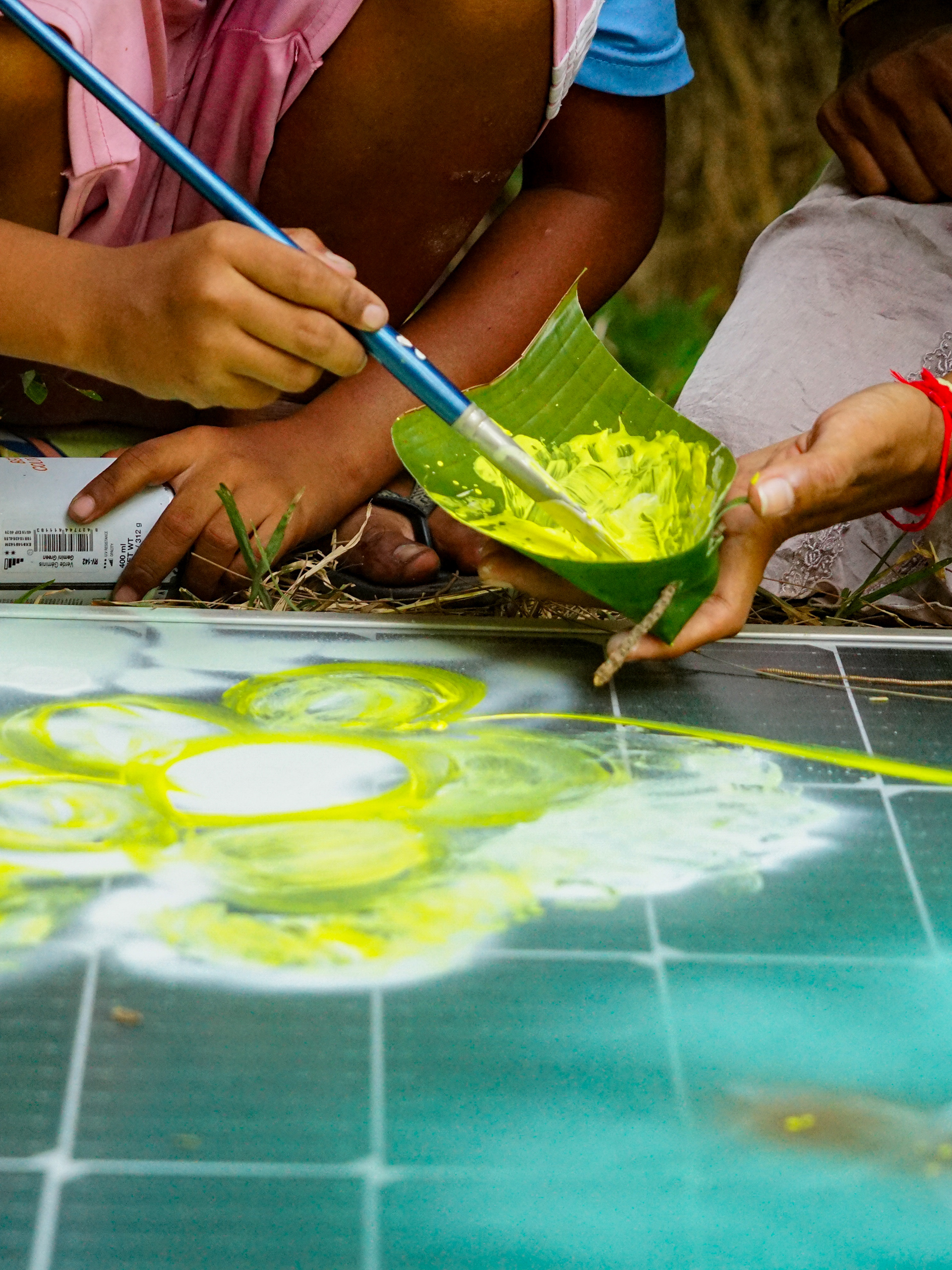
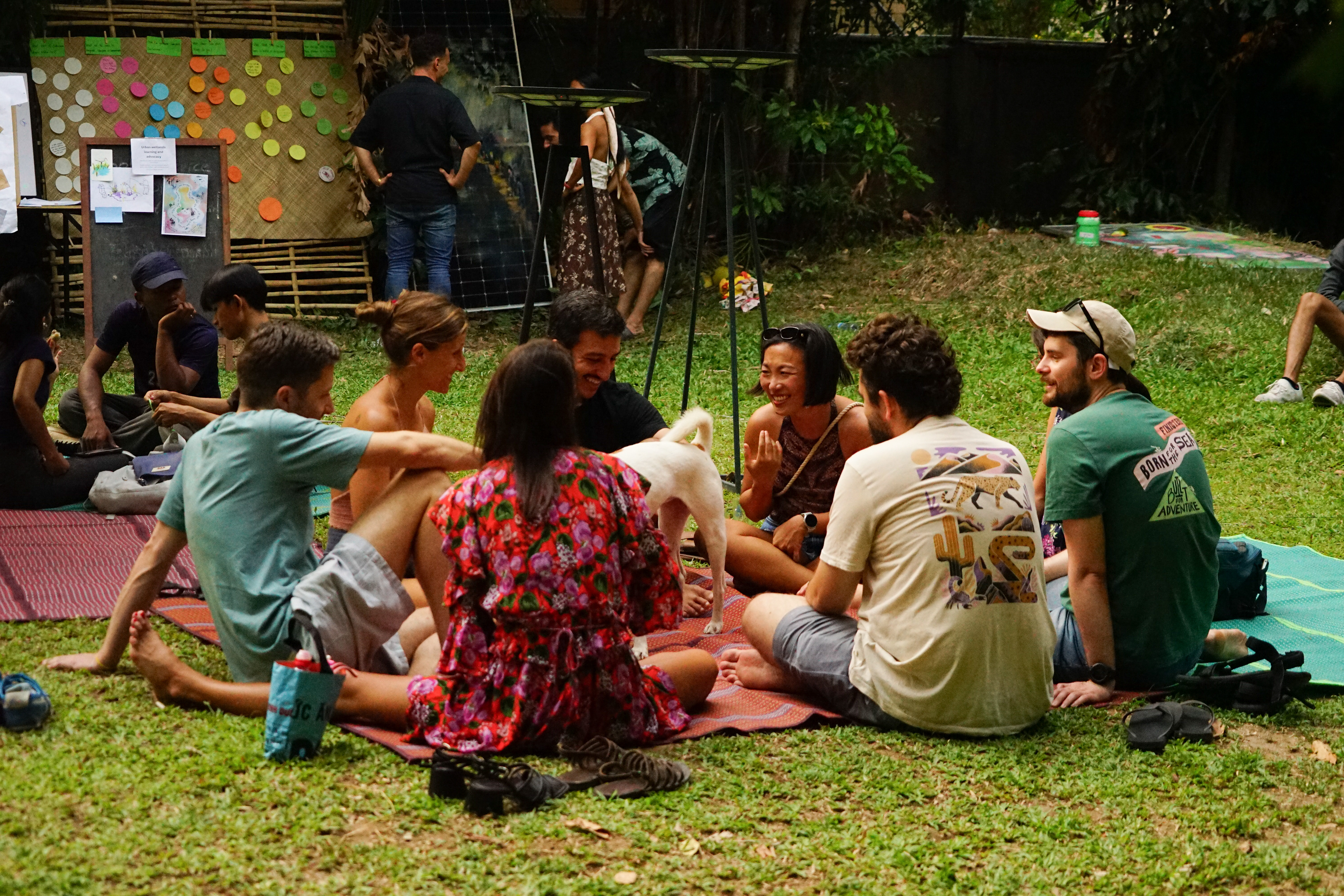
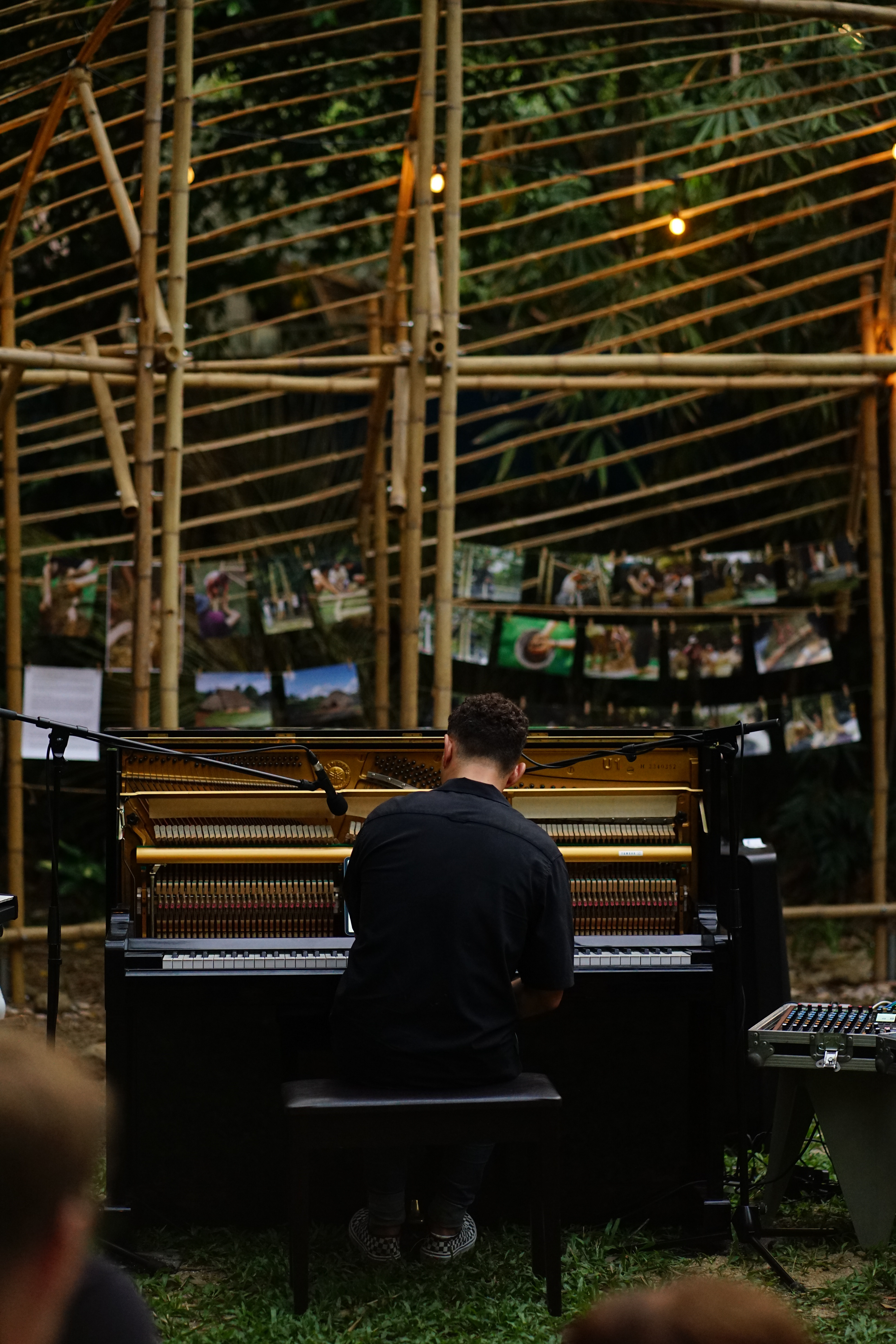
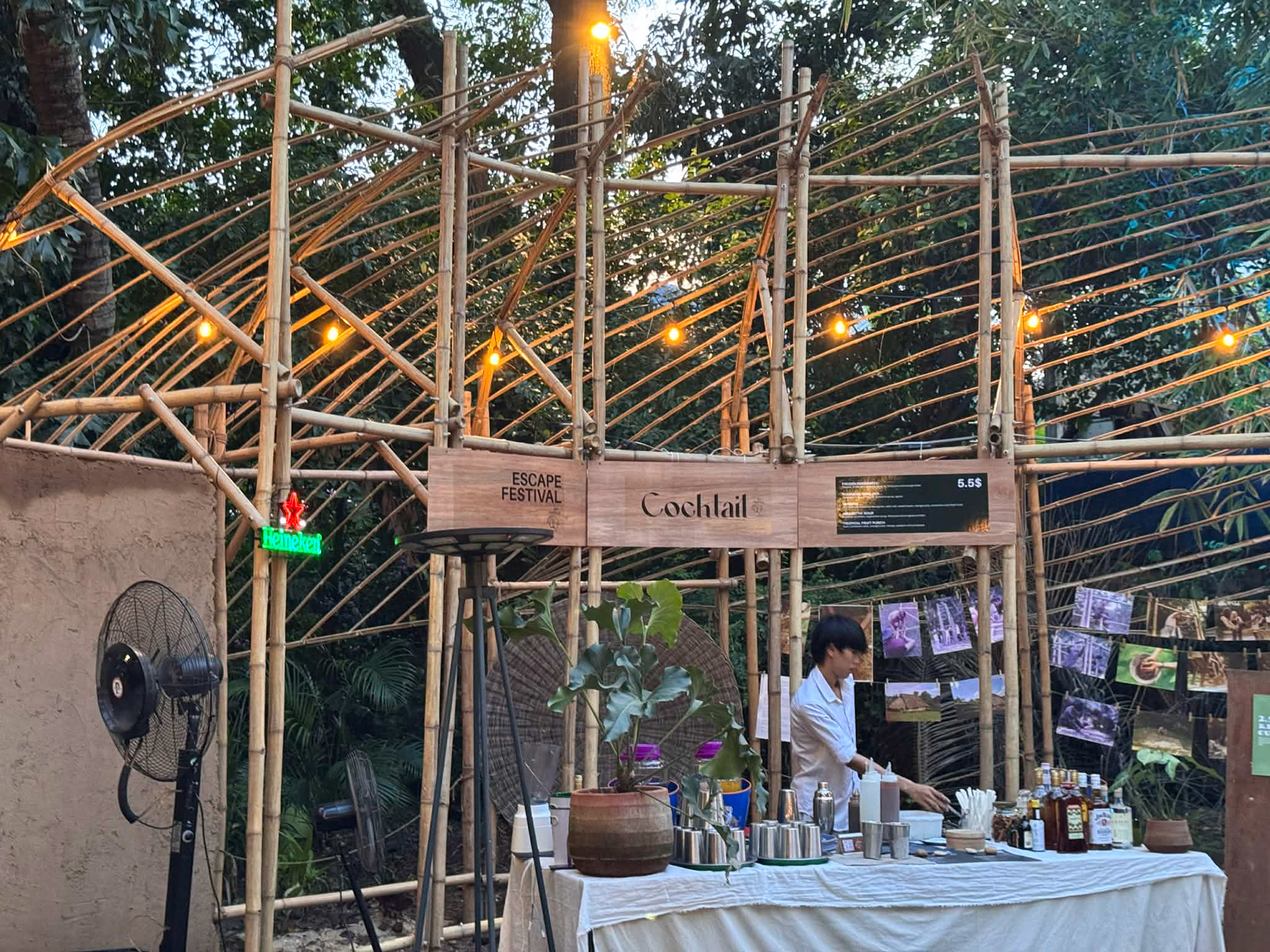
The Indigenous Pavilion was created for the Solarpunk Exhibition held at Maloop Garden in Phnom Penh in February 2026. The initial idea emerged during a conversation with my friend Miguel, organizer of the exhibition, while discussing how architecture could physically embody the values of the solarpunk movement.
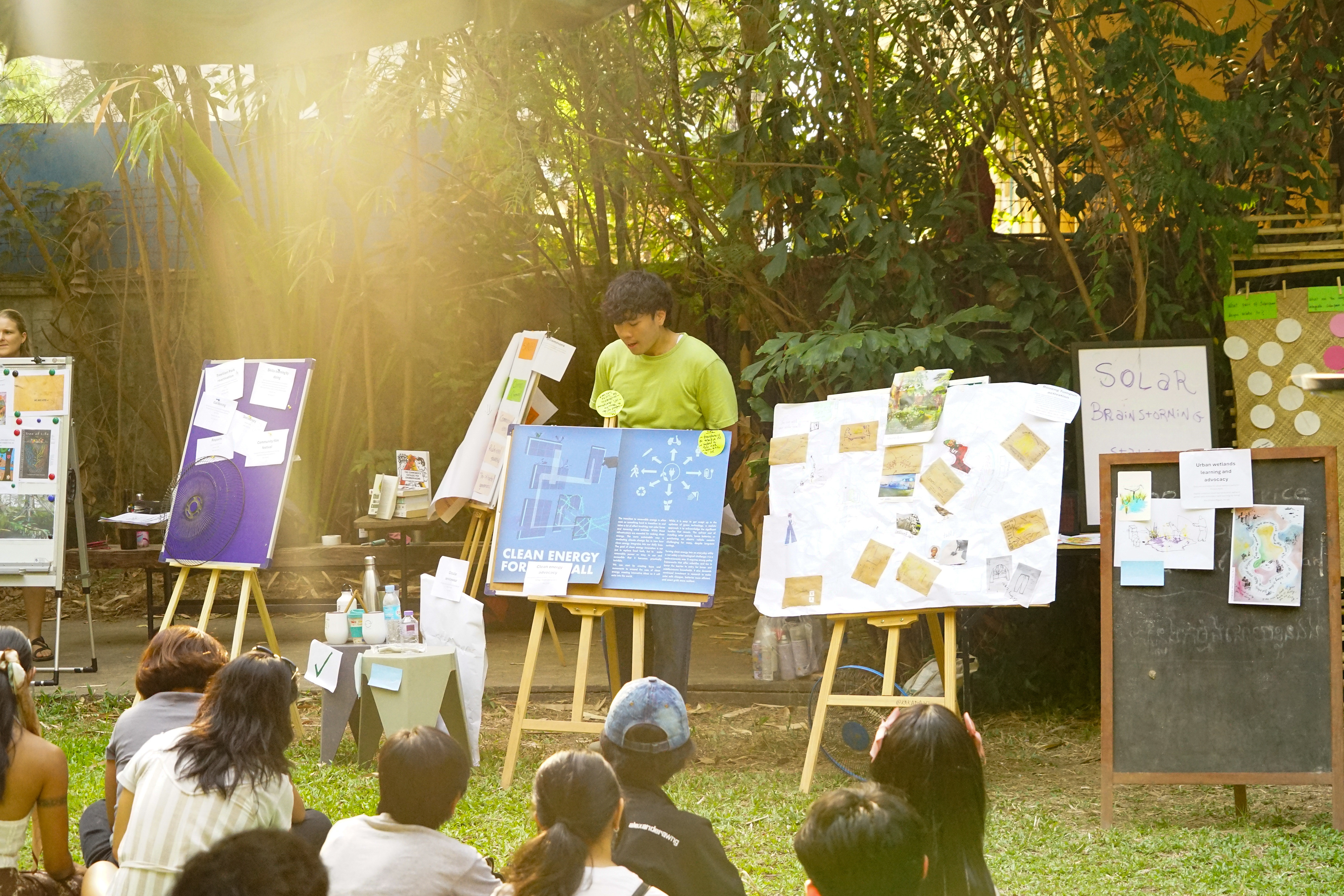
Solarpunk imagines hopeful futures where humans live in closer balance with nature, communities, and technology. Rather than focusing on dystopian narratives, it promotes regenerative ways of living based on cooperation, sustainability, low-impact construction, shared knowledge, and collective care.
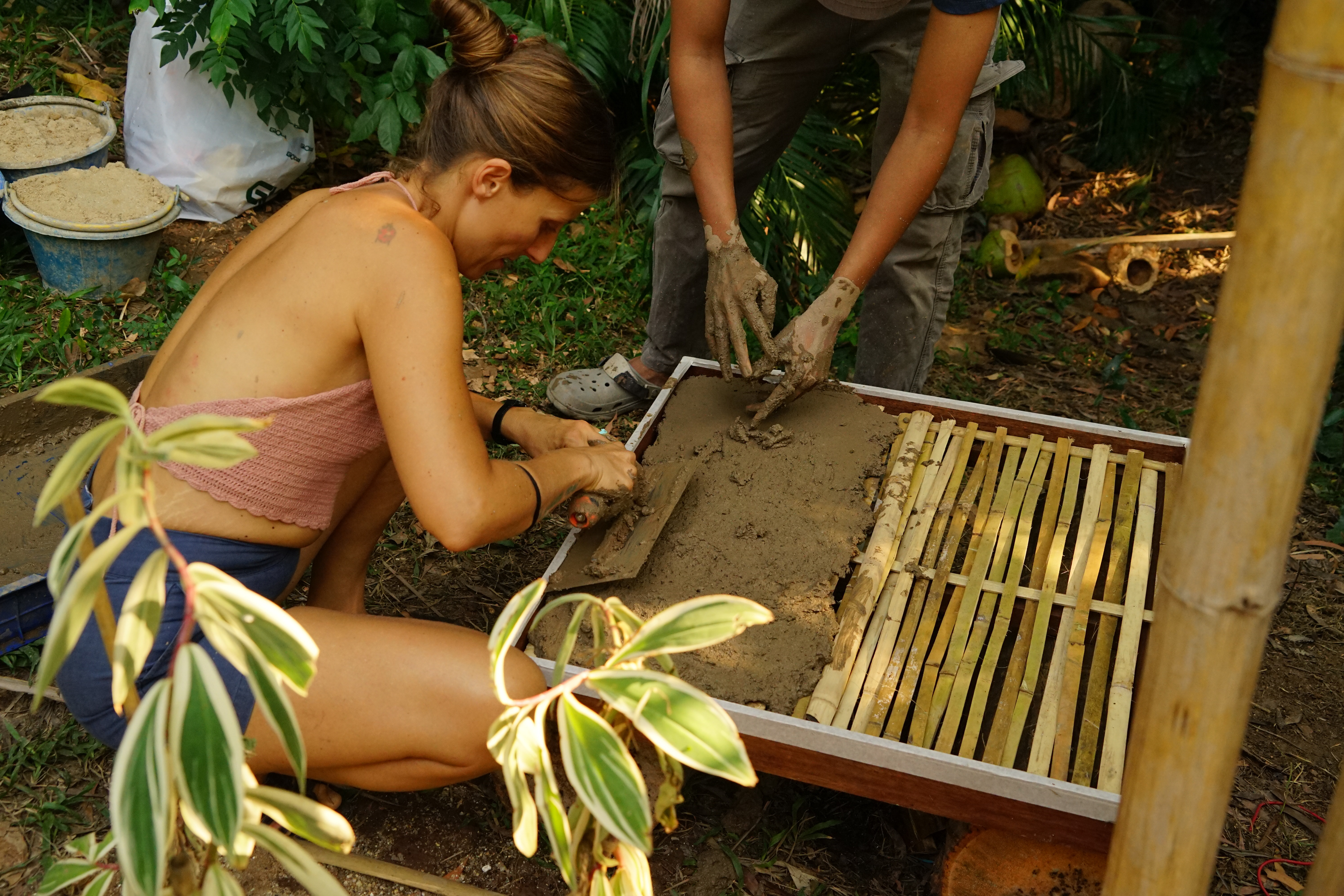
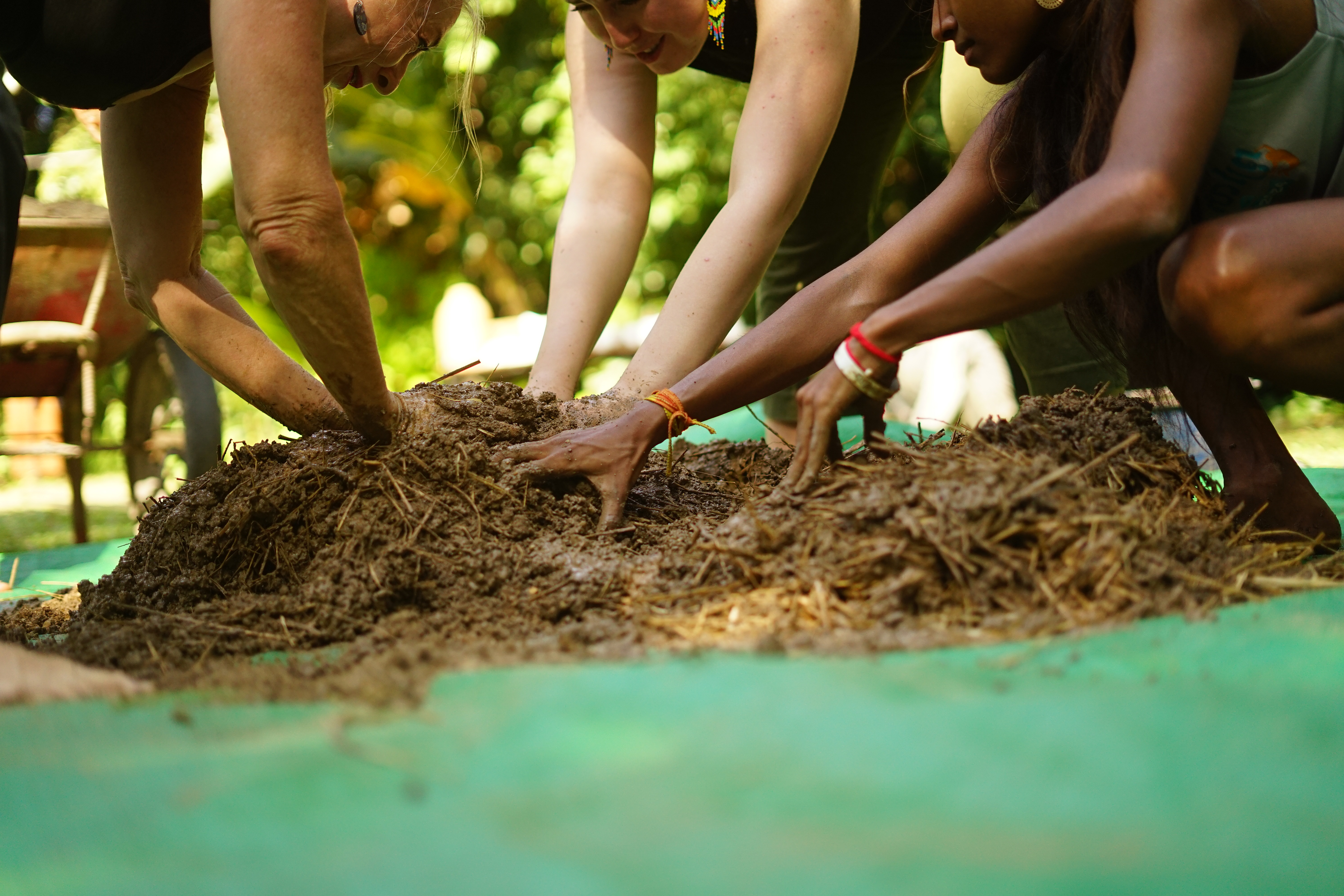
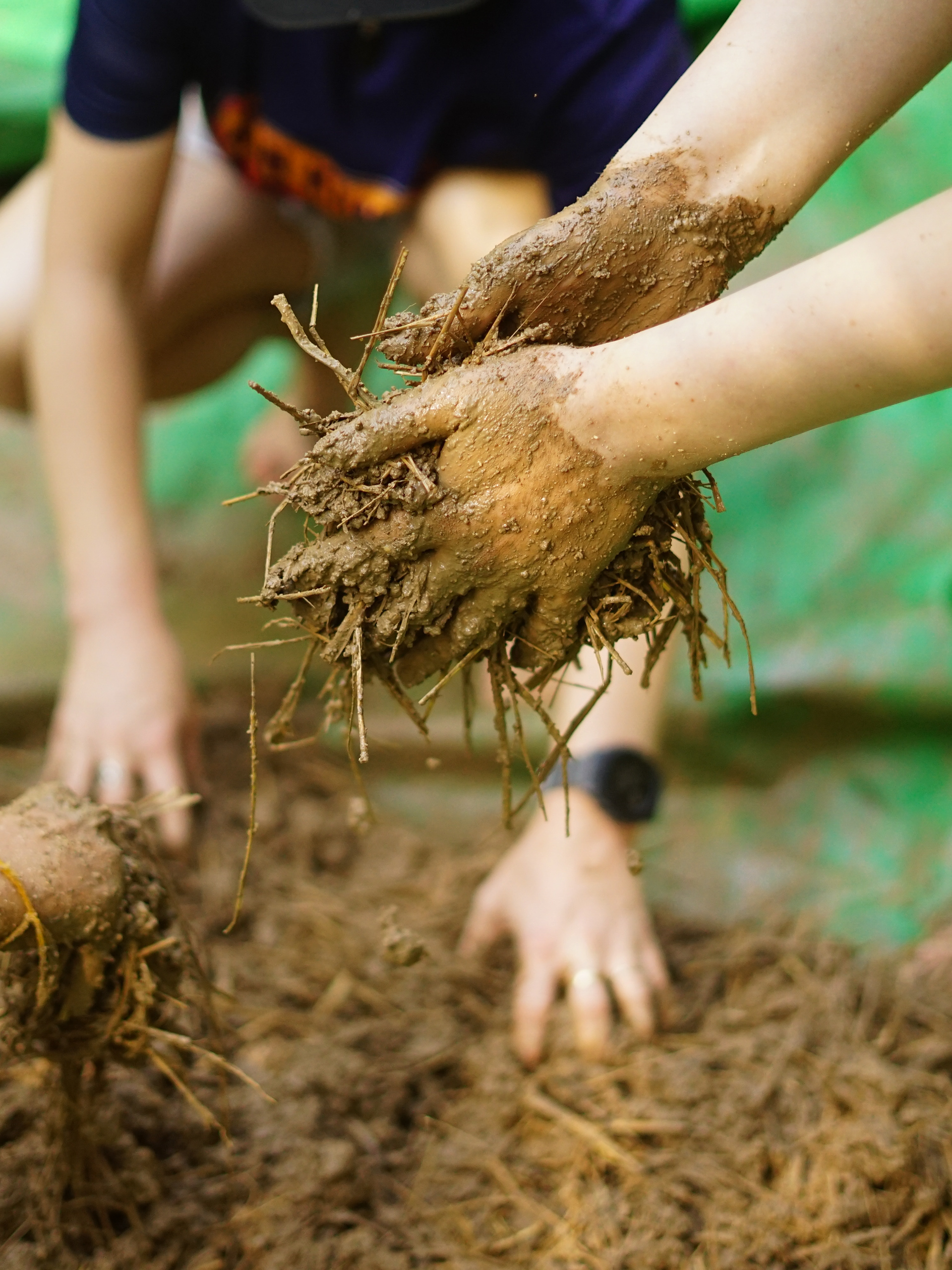
Within this context, I wanted to promote earth as a construction material: simple, accessible, low-impact, and deeply connected to both place and human touch. To create a structural framework for this exploration, I drew inspiration from a recent trip to Mondulkiri, where I visited Bunong villages and learned more about indigenous building traditions. This experience made me reflect on indigenous communities not as symbols of the past, but as living examples of how tradition and innovation can coexist.
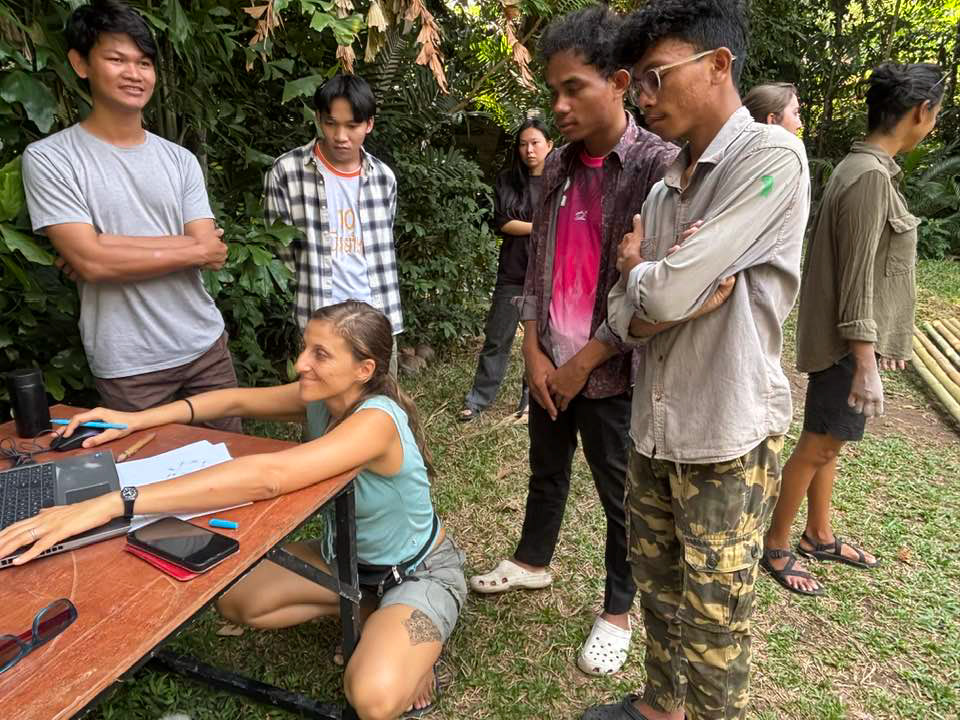
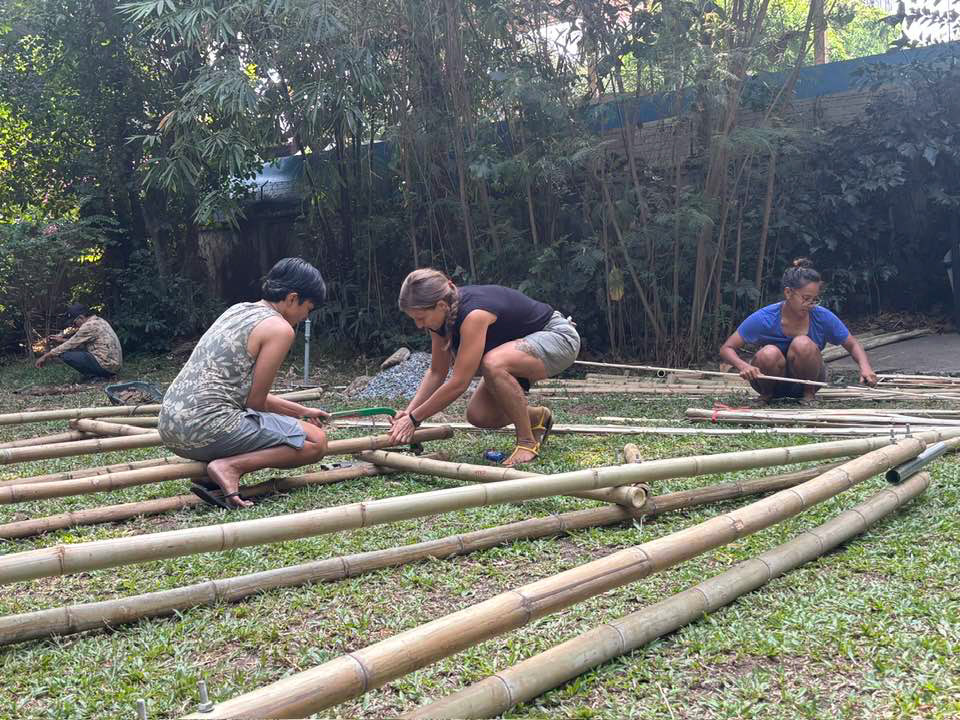
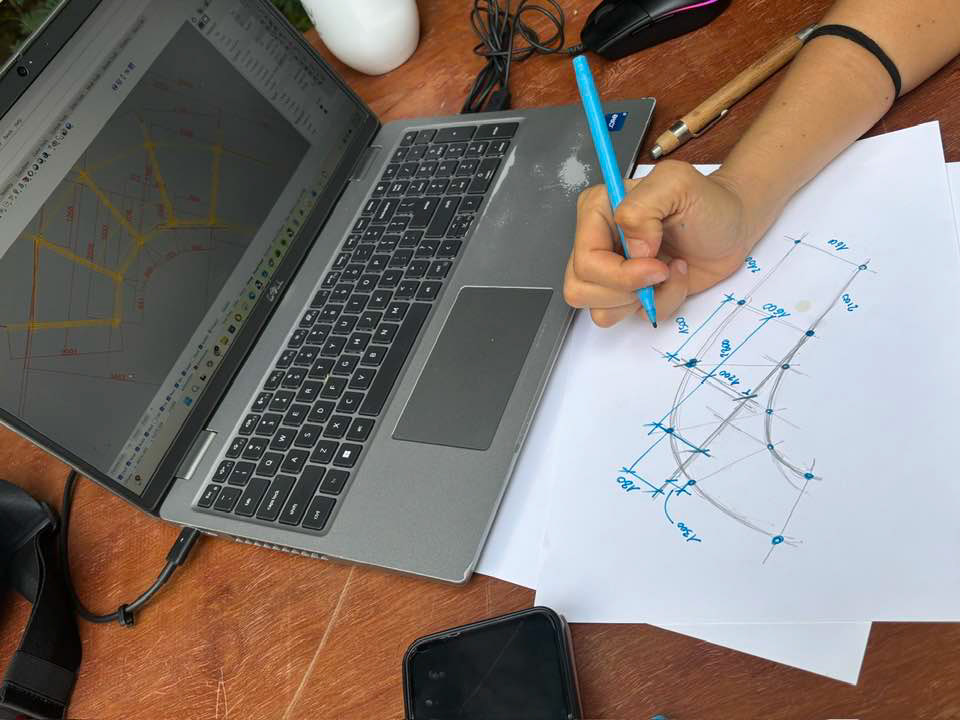
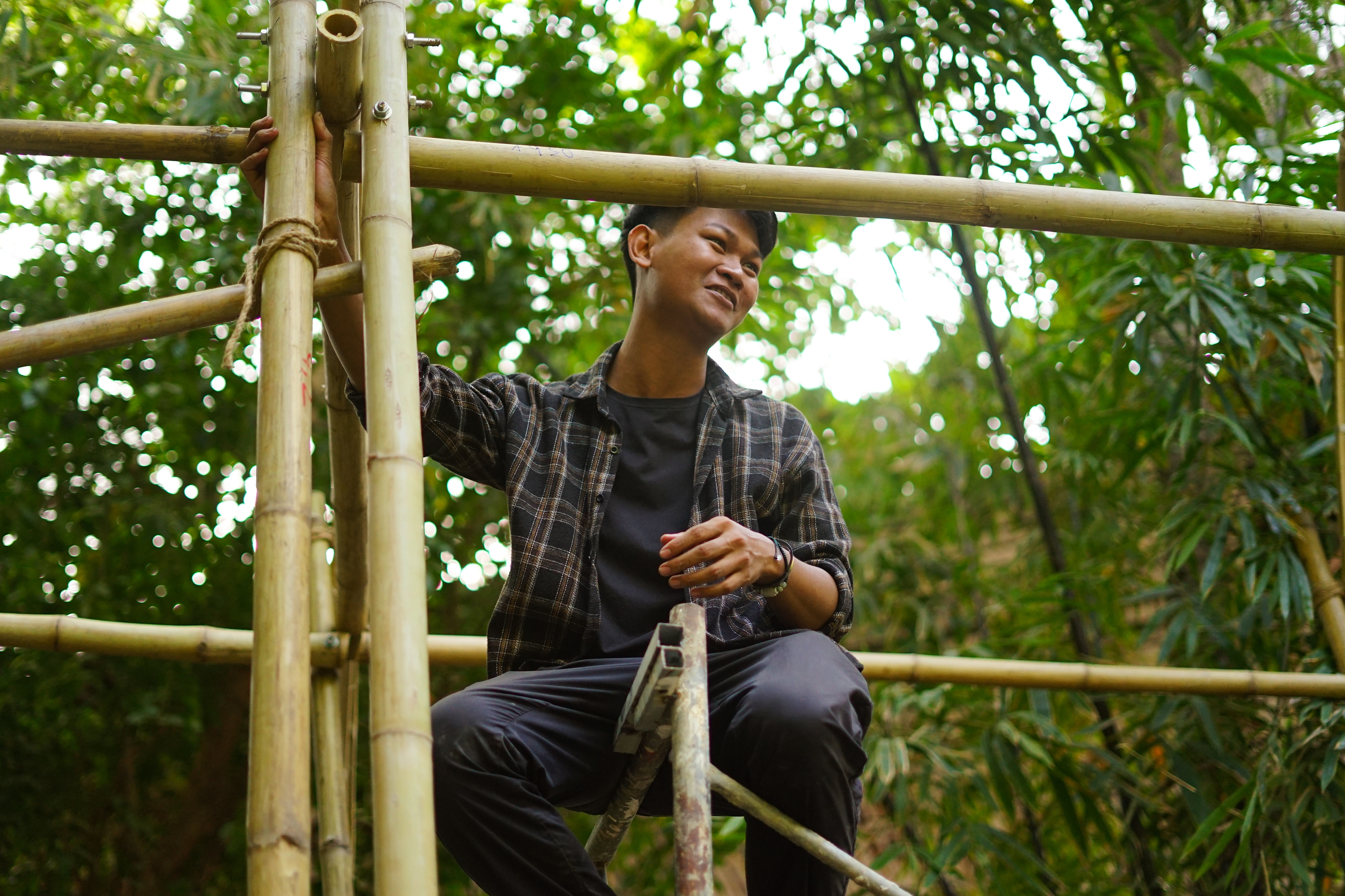
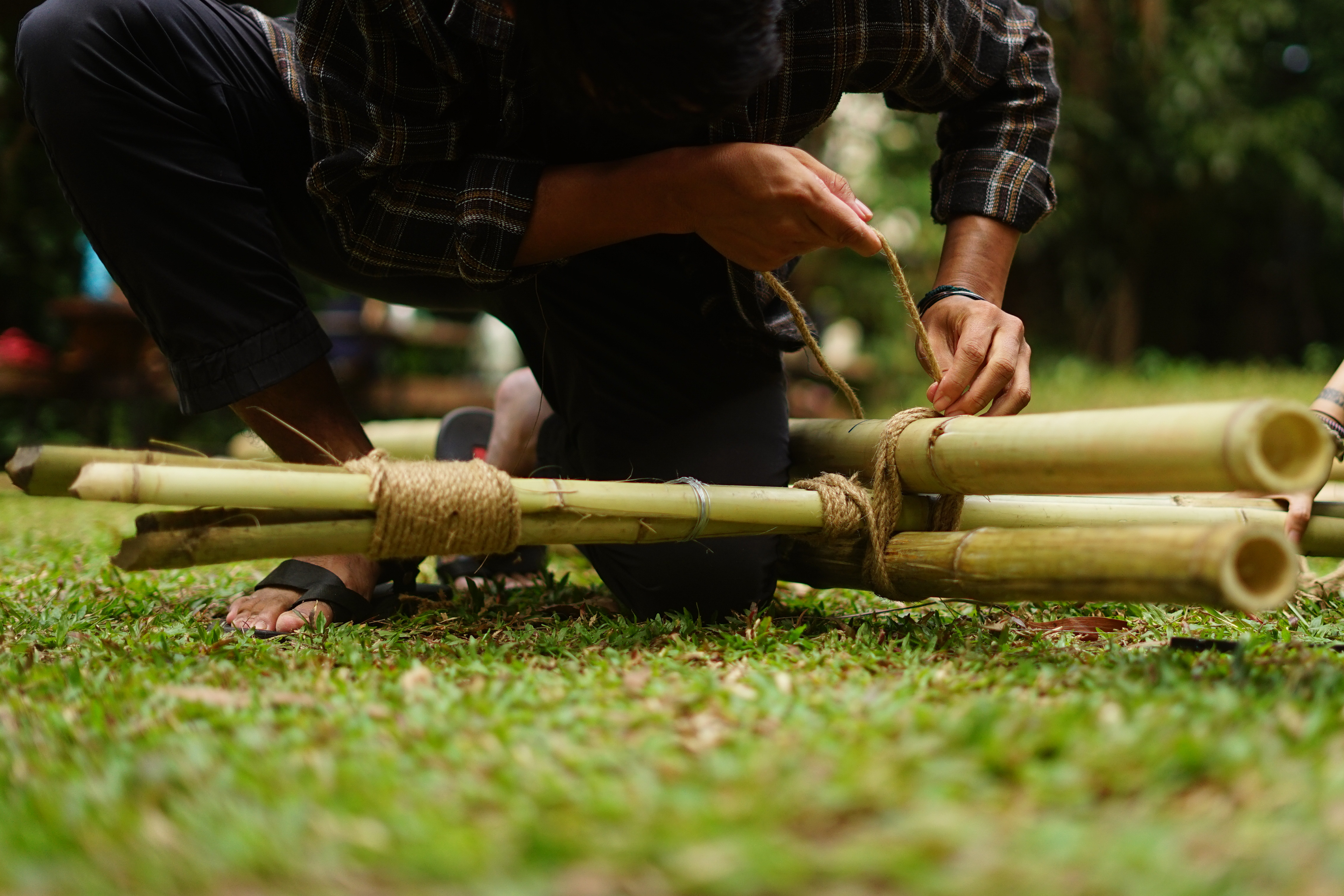
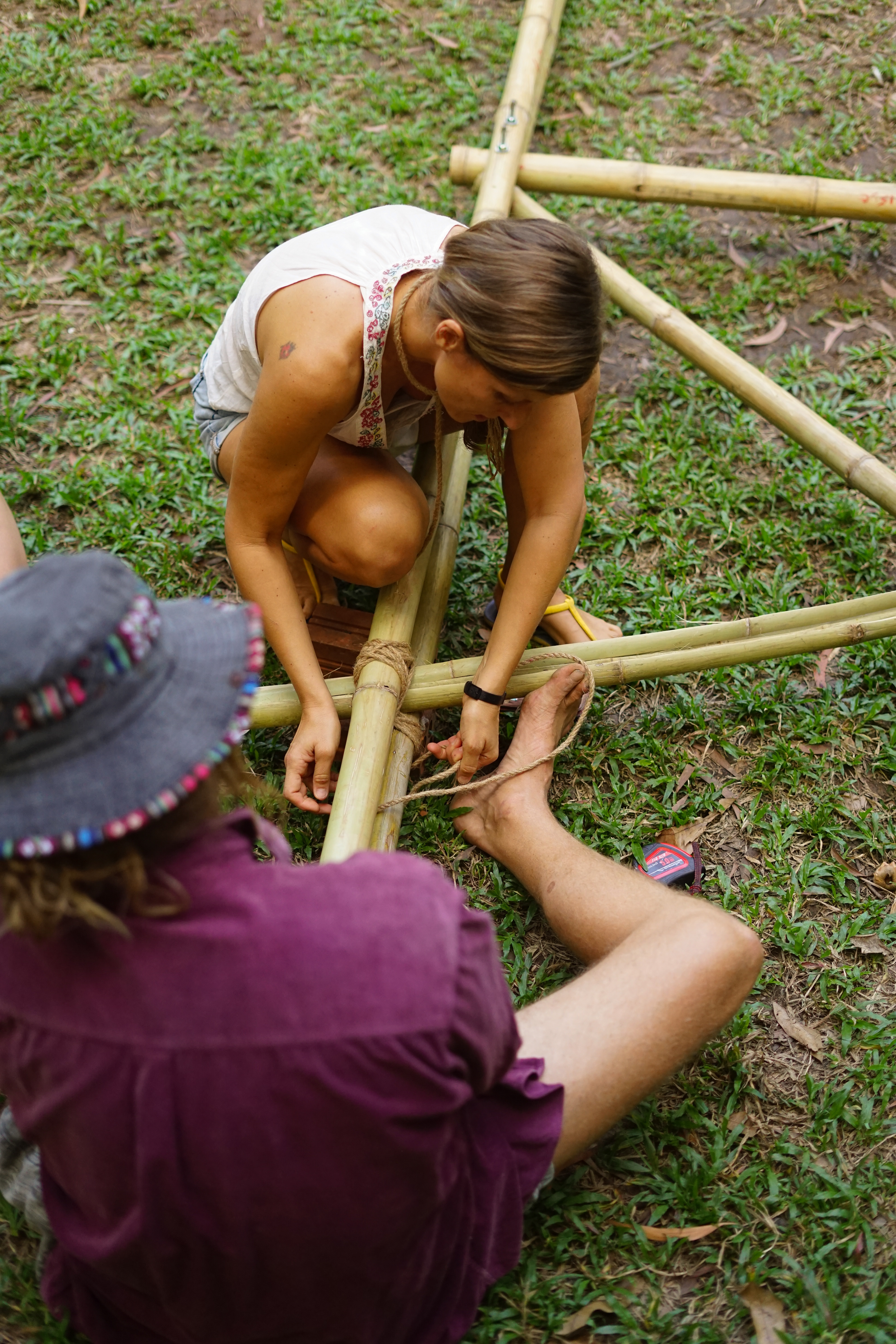
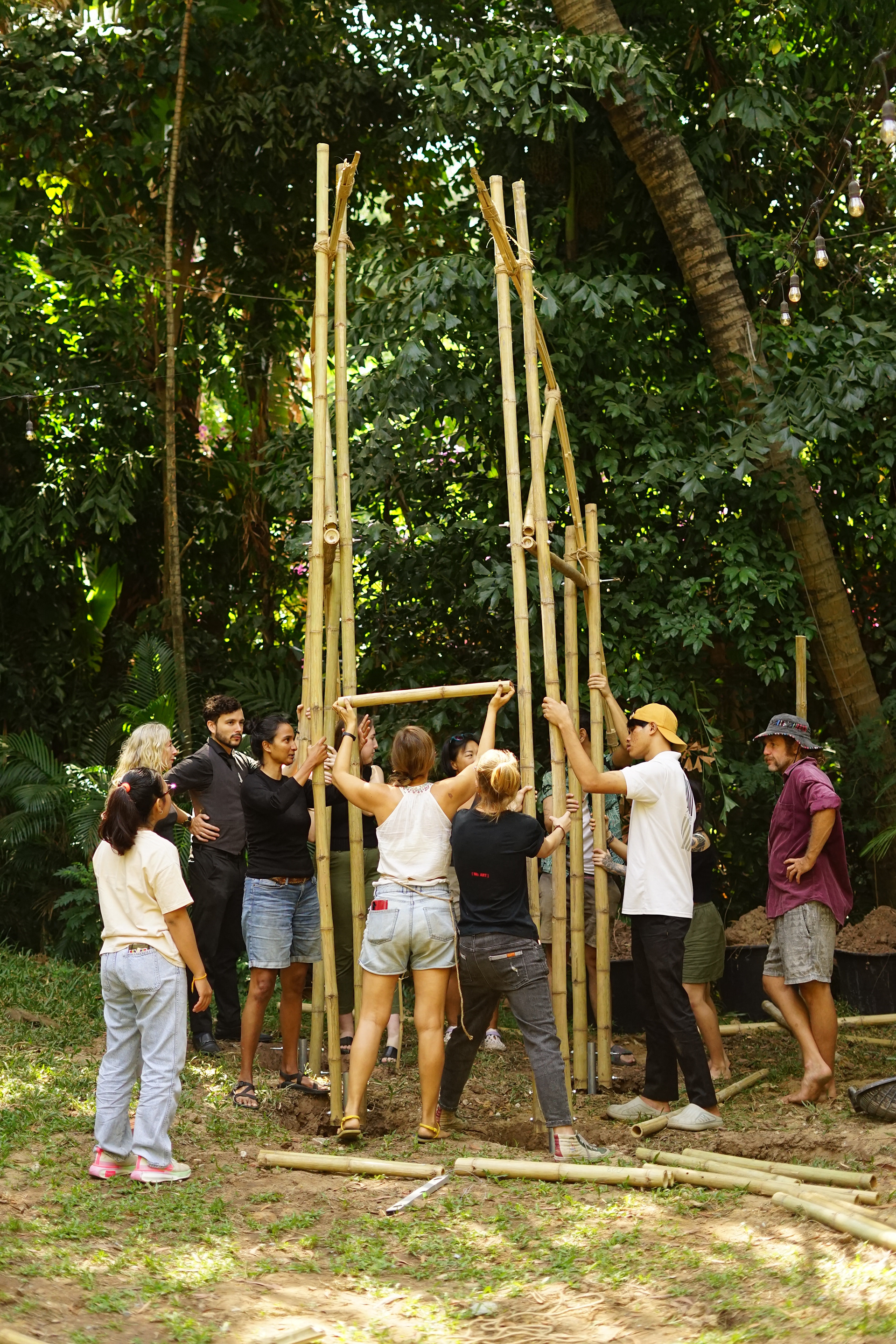
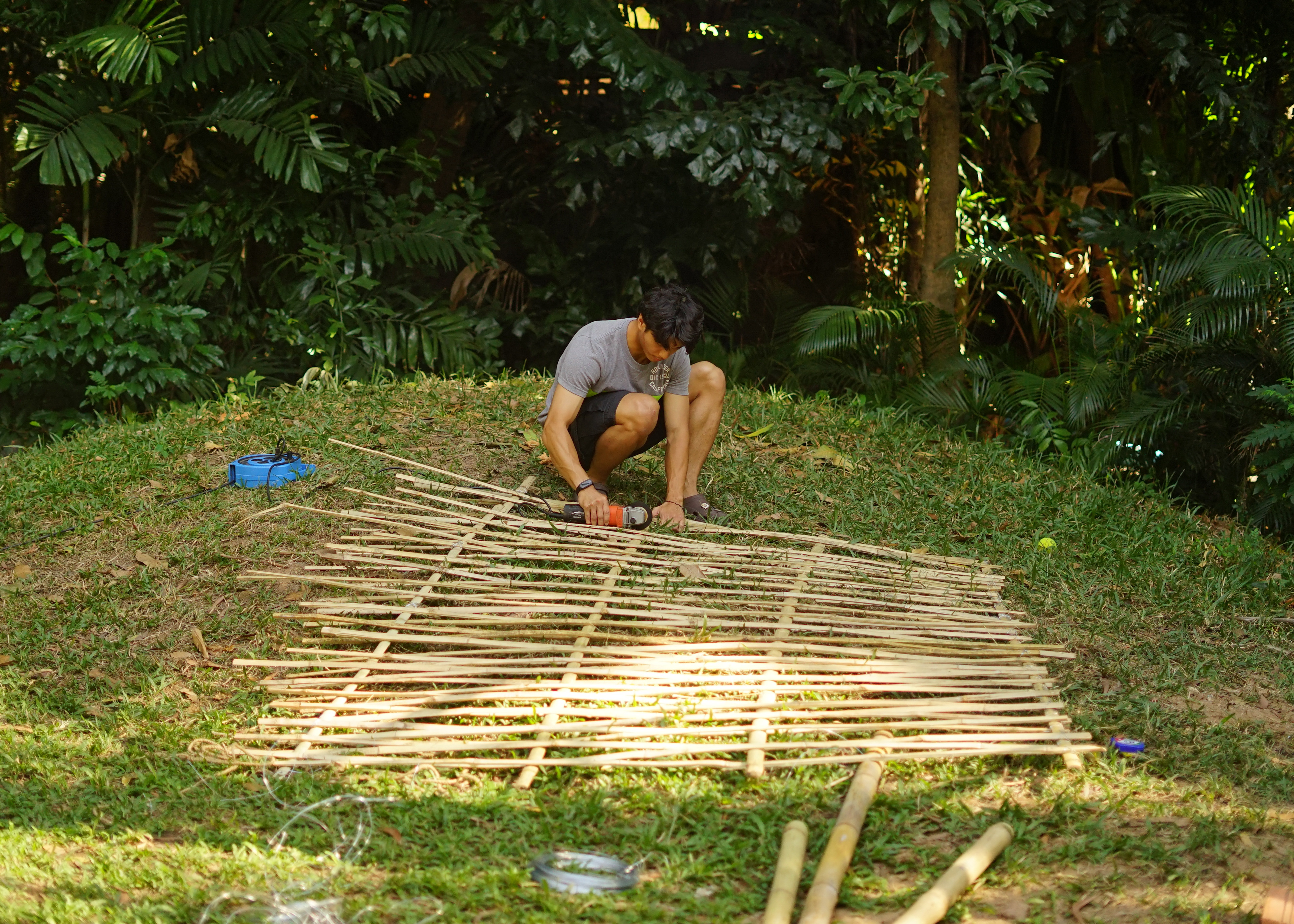
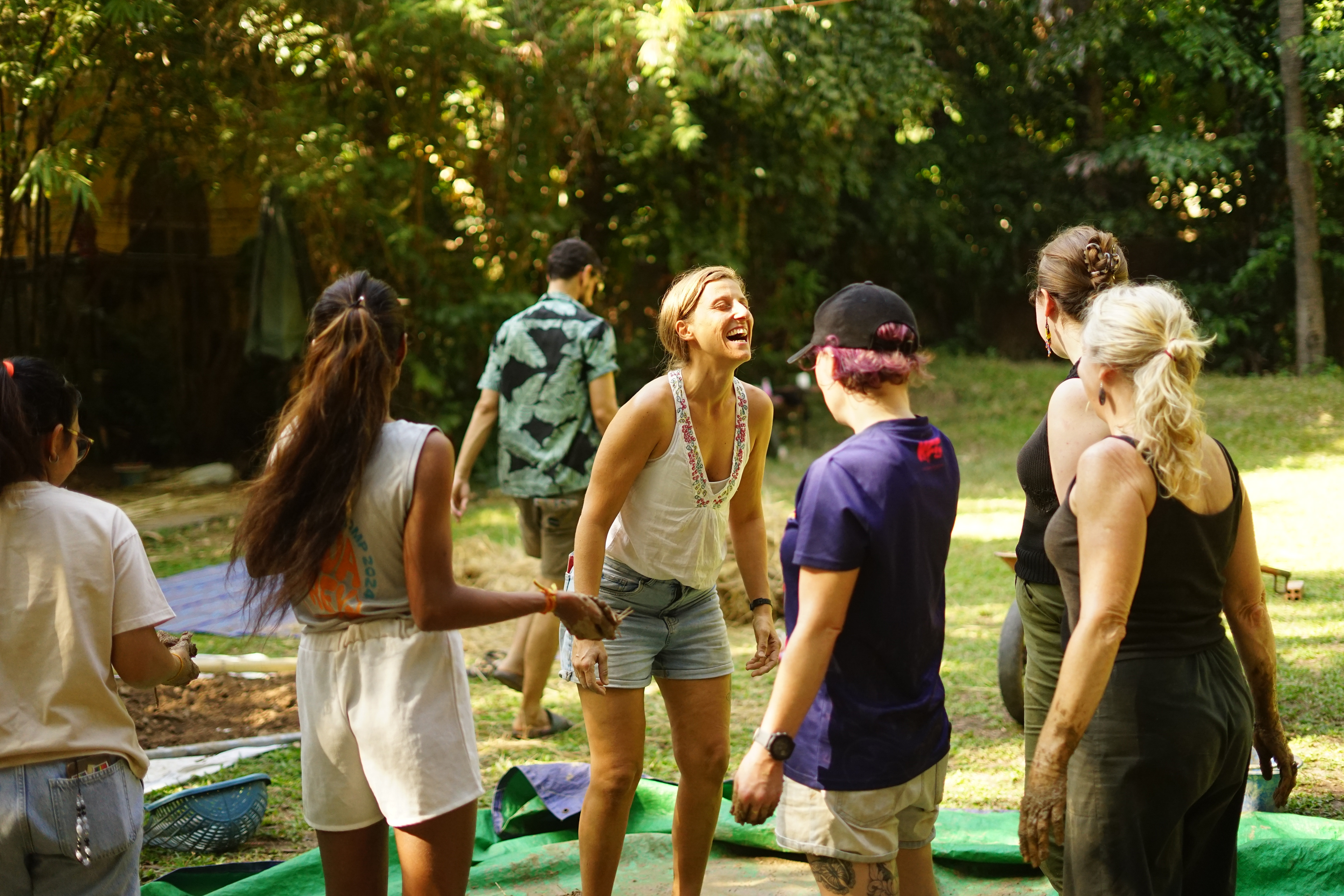
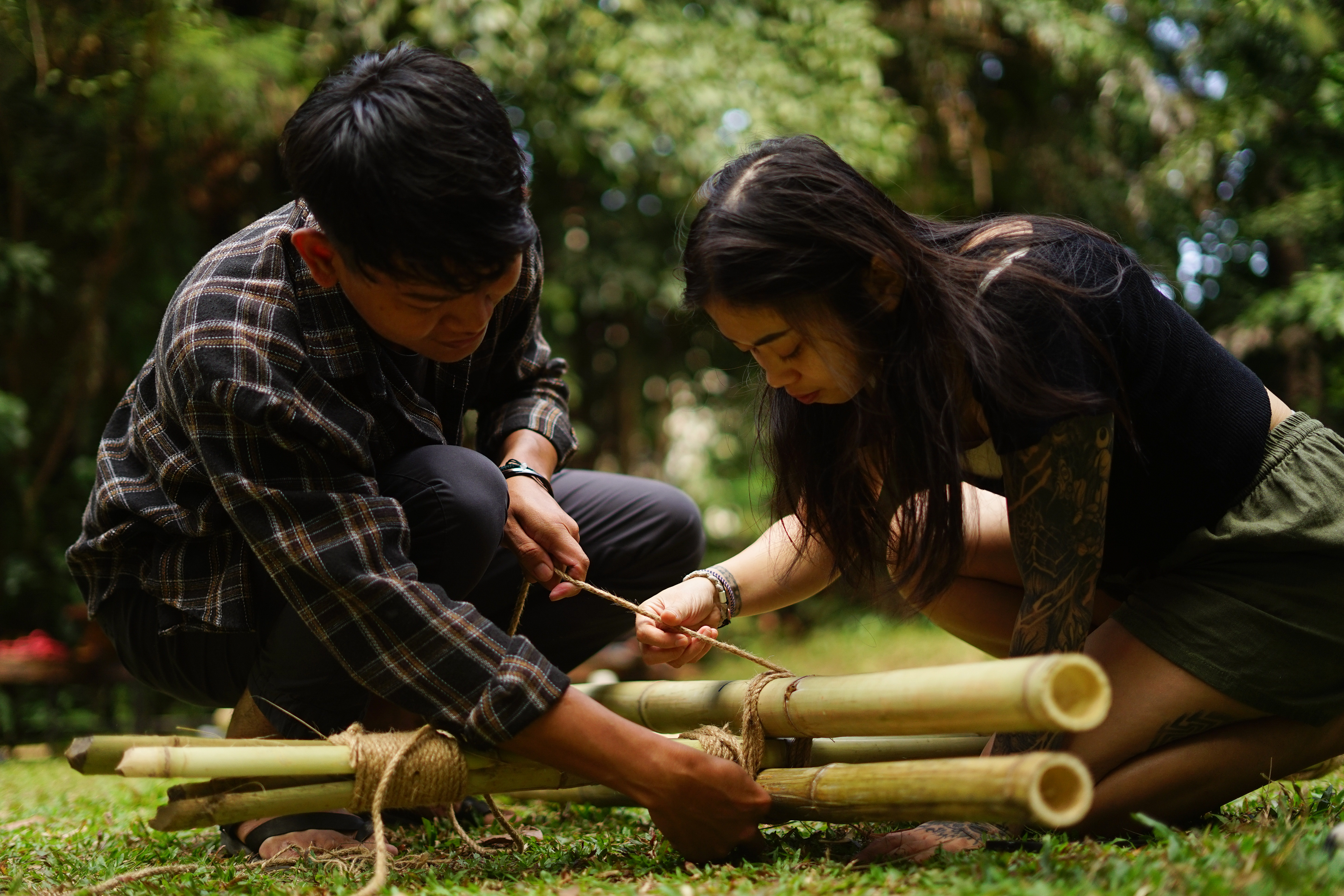
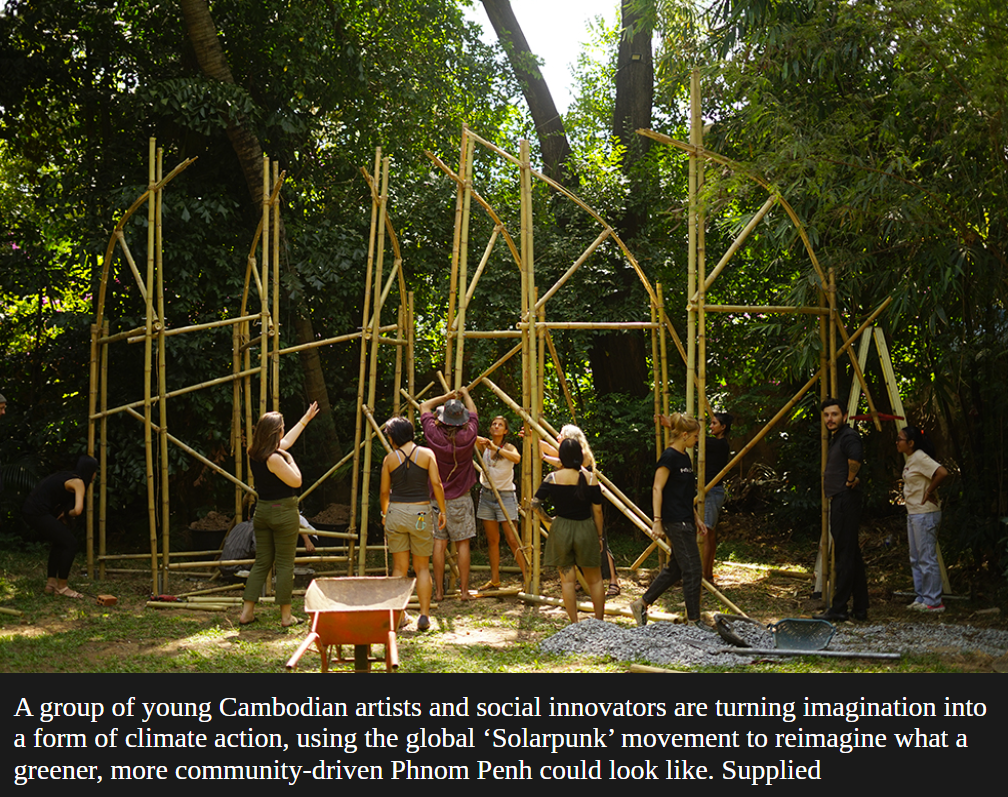
The pavilion was built during three open co-construction sessions involving volunteers eager to learn bamboo construction techniques. What emerged went far beyond the construction of a temporary structure. The workshops generated an incredibly active and enthusiastic community of people willing to learn, collaborate, and build together with their hands.
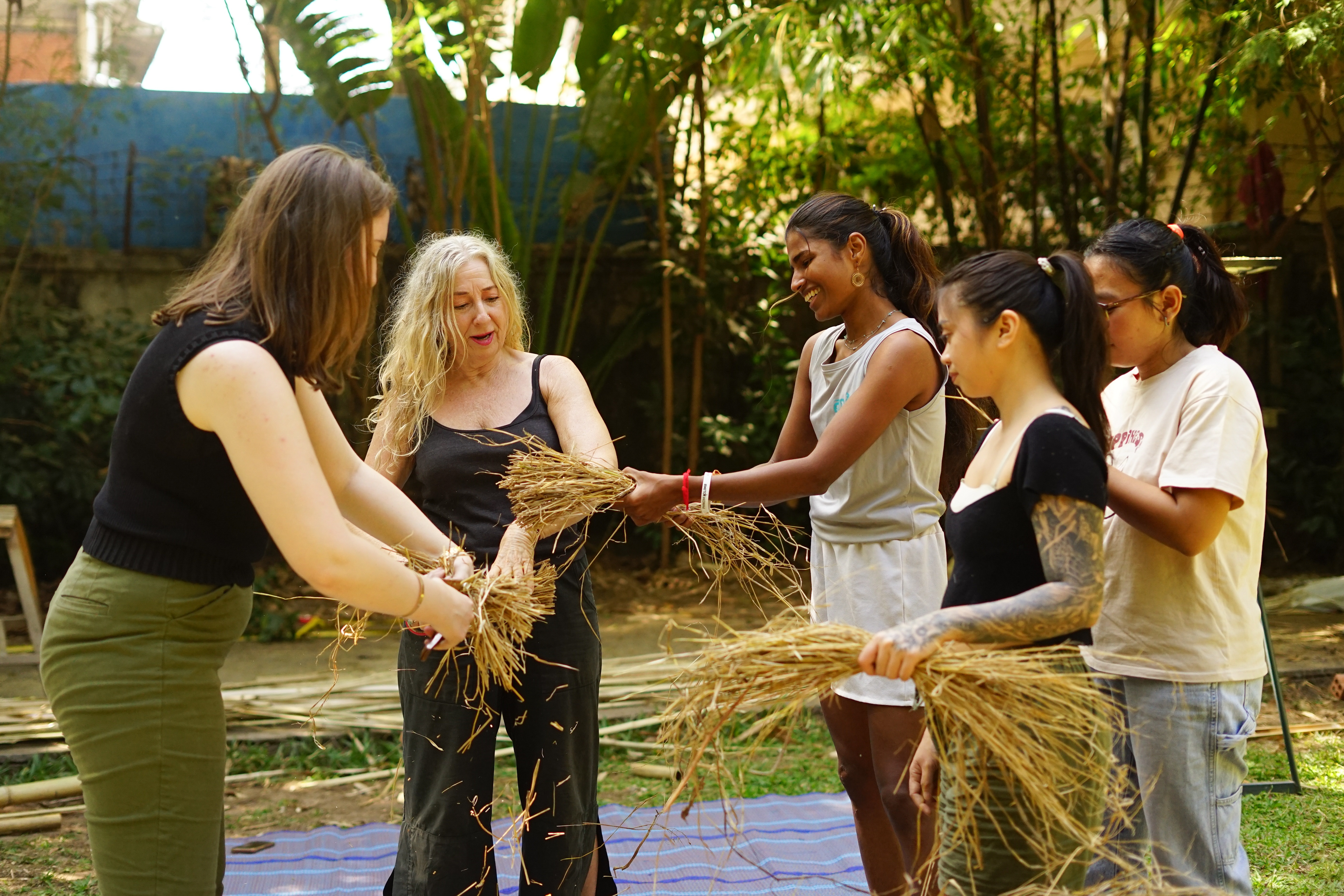
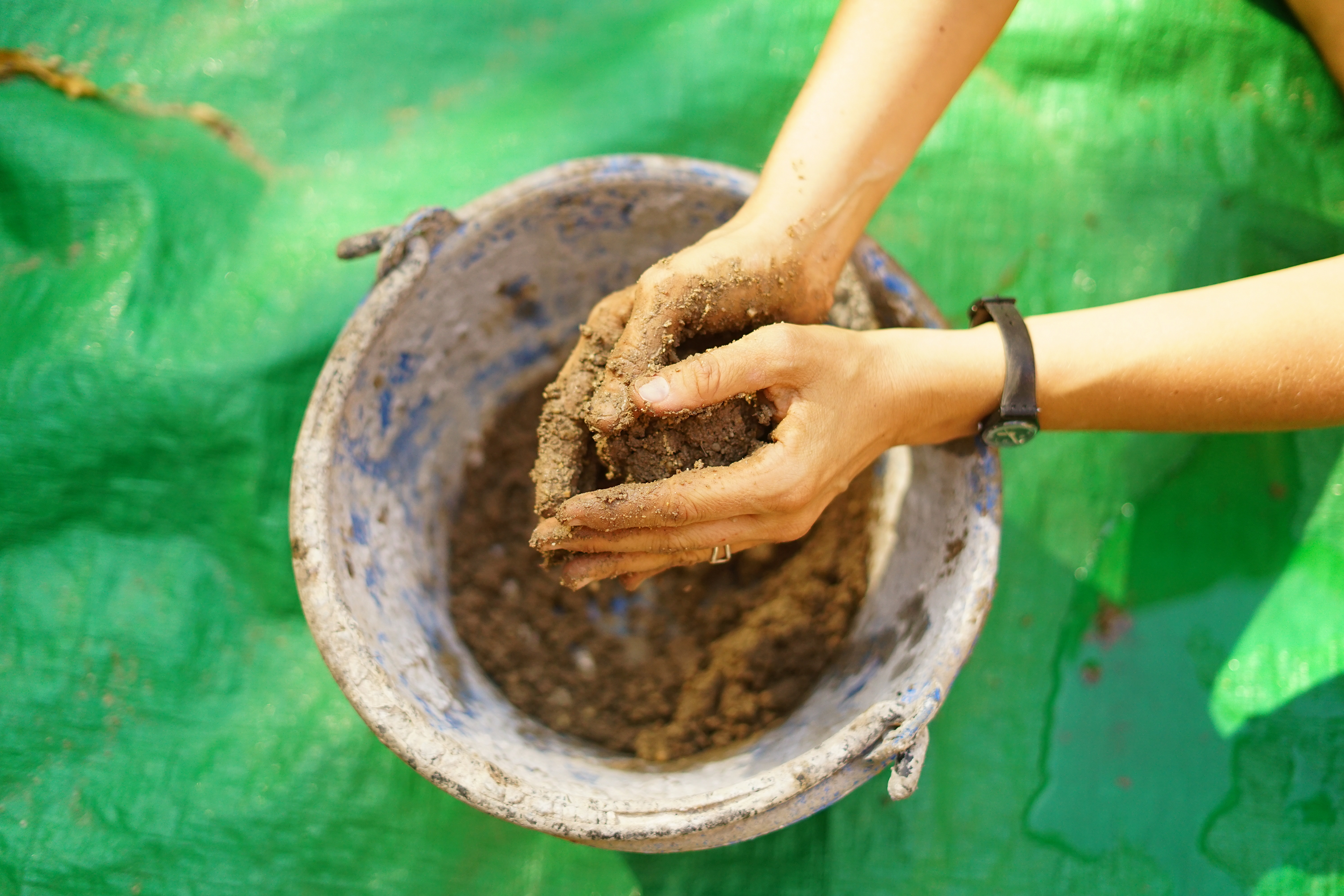
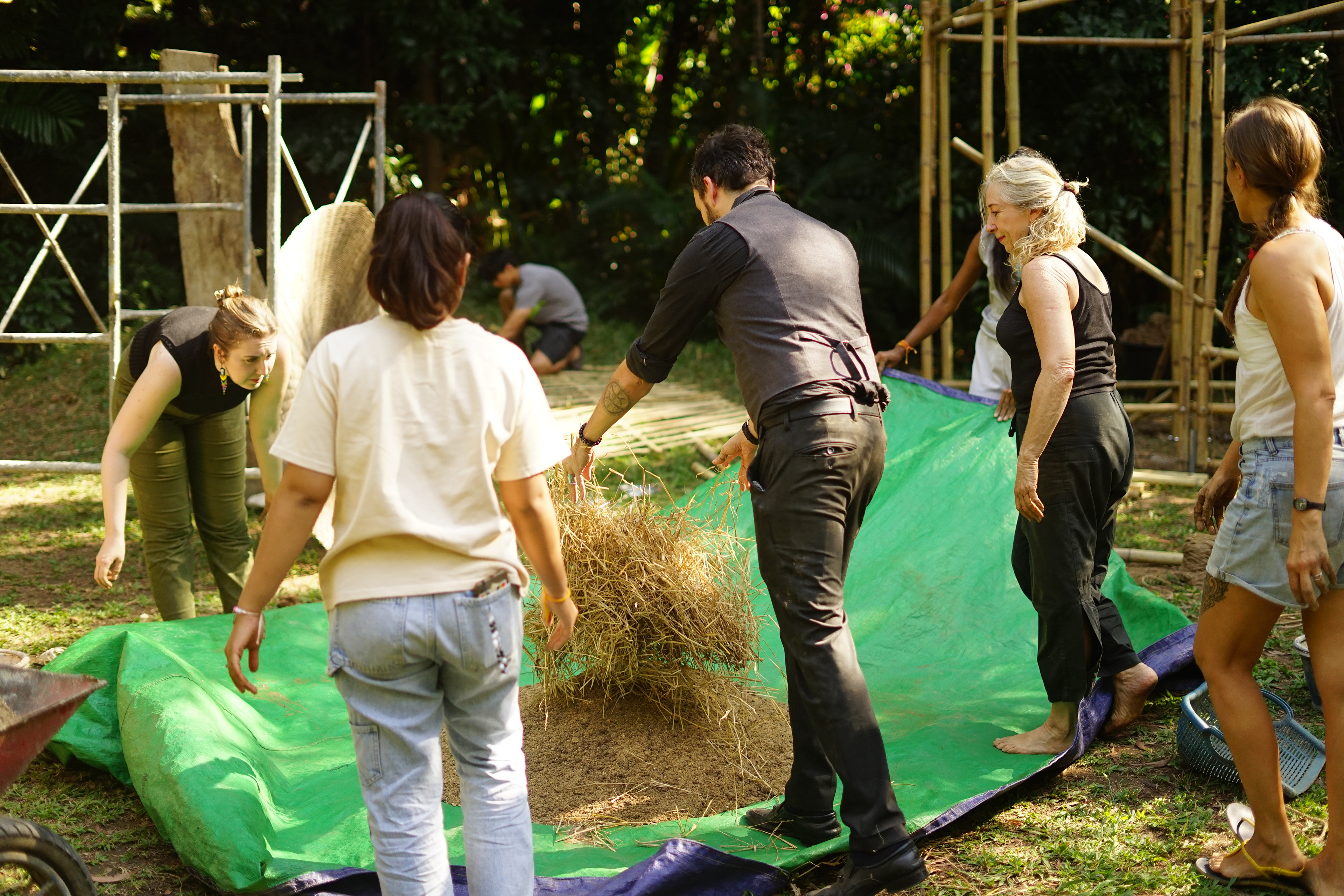
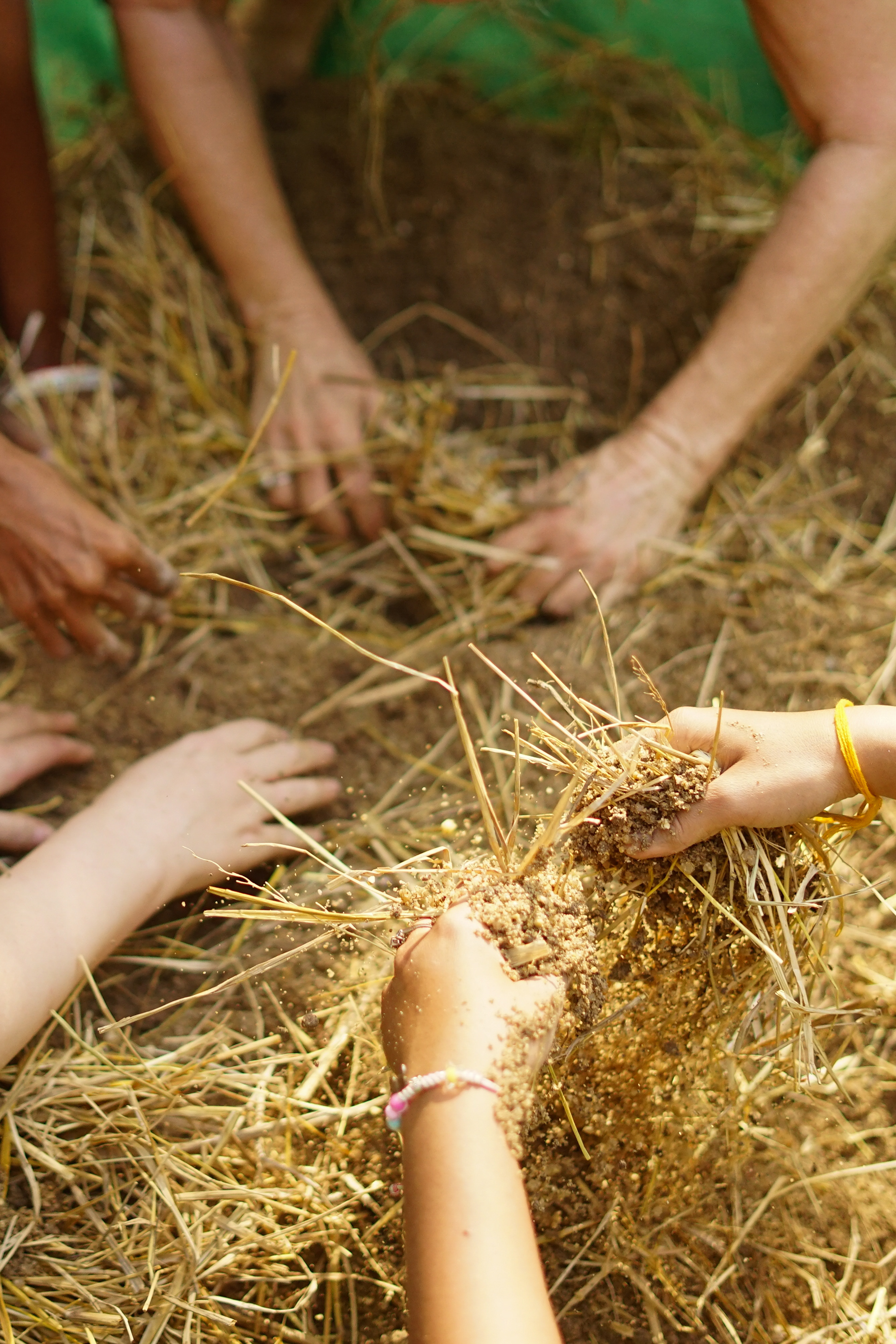
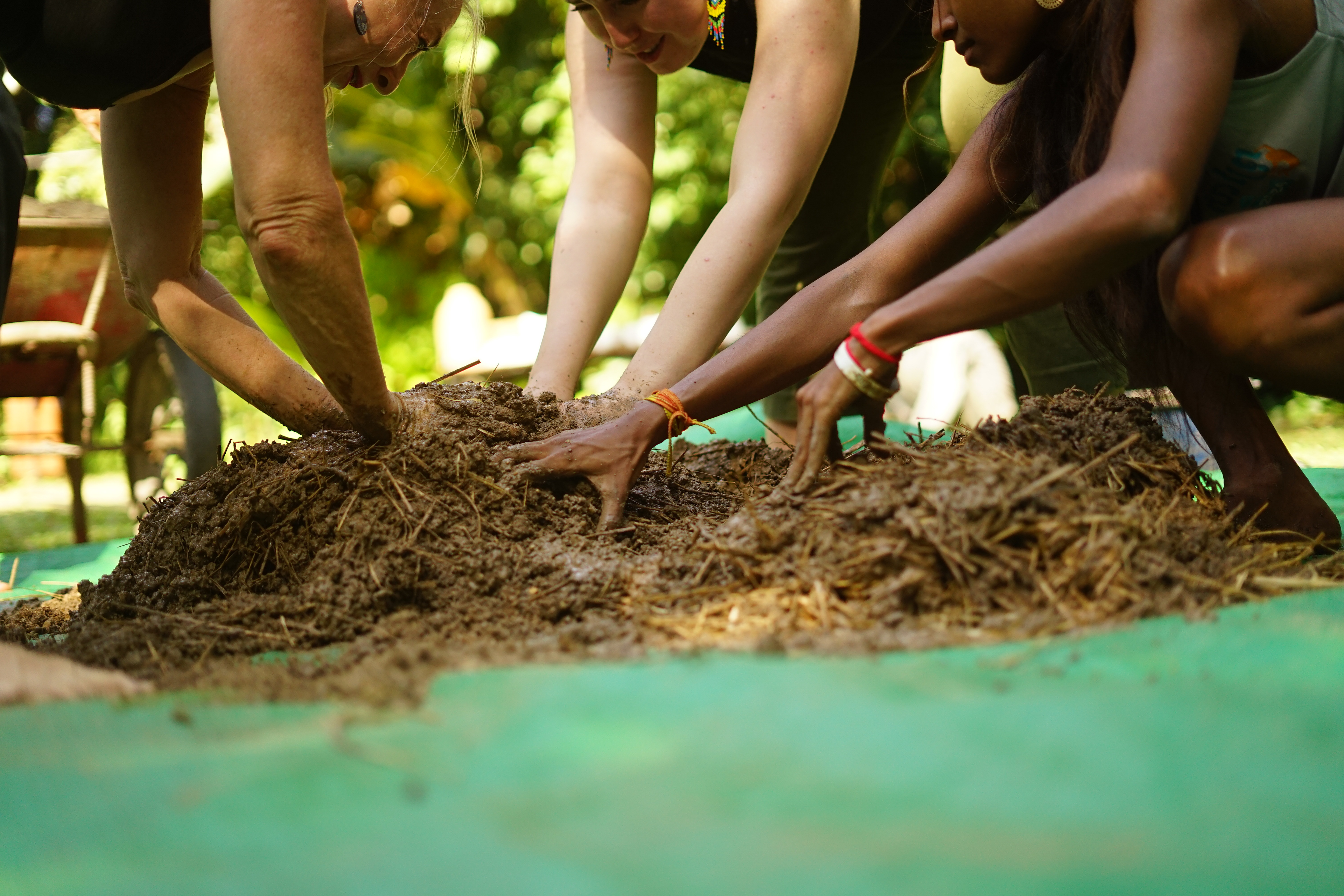
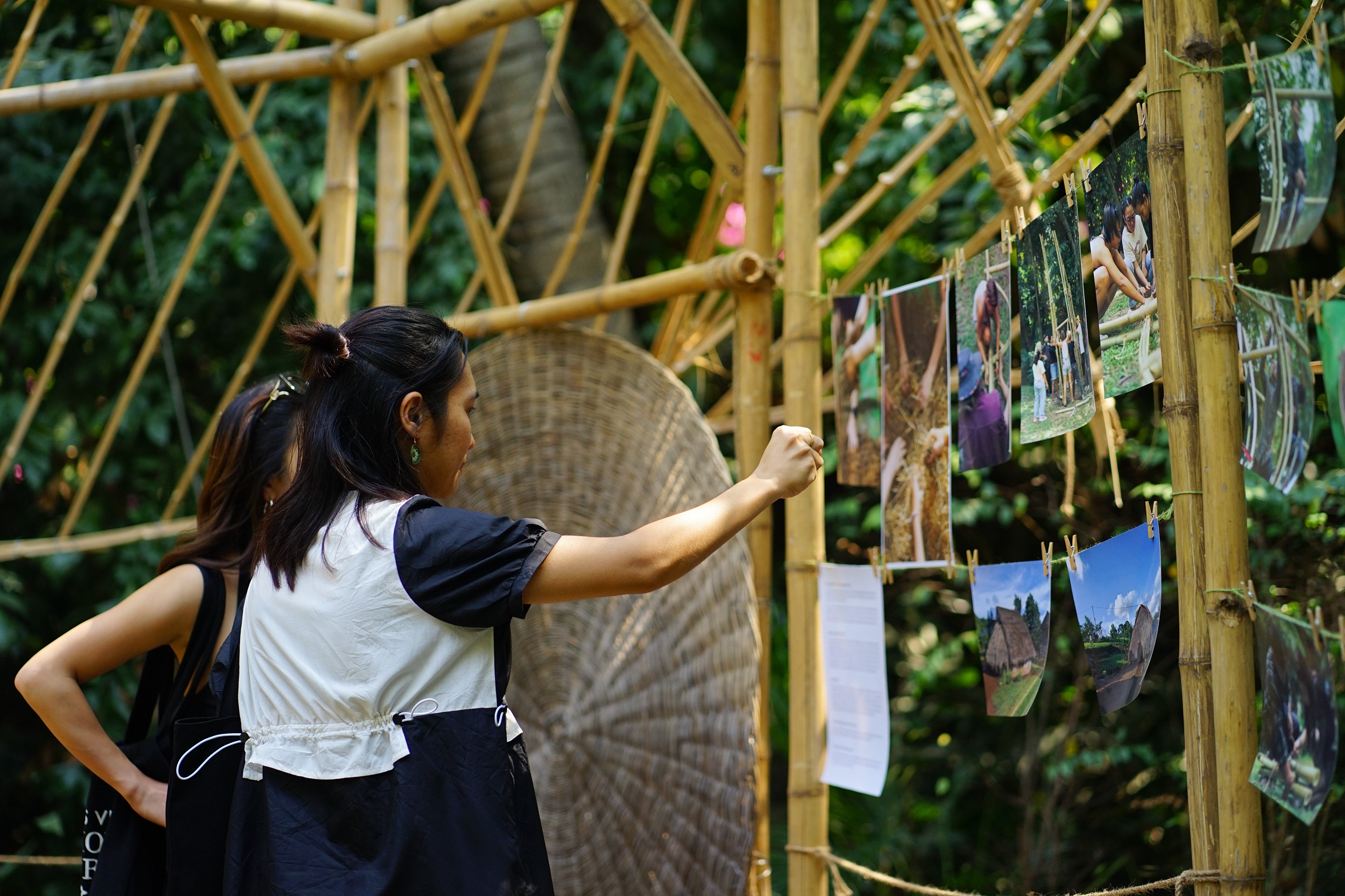
One of the pavilion walls was built using a wattle and daub technique: woven bamboo filled with a mixture of clay, sand, and straw. Another wall became an exhibition surface displaying photographs taken throughout the workshops, documenting both the construction process and the collective experience behind it.
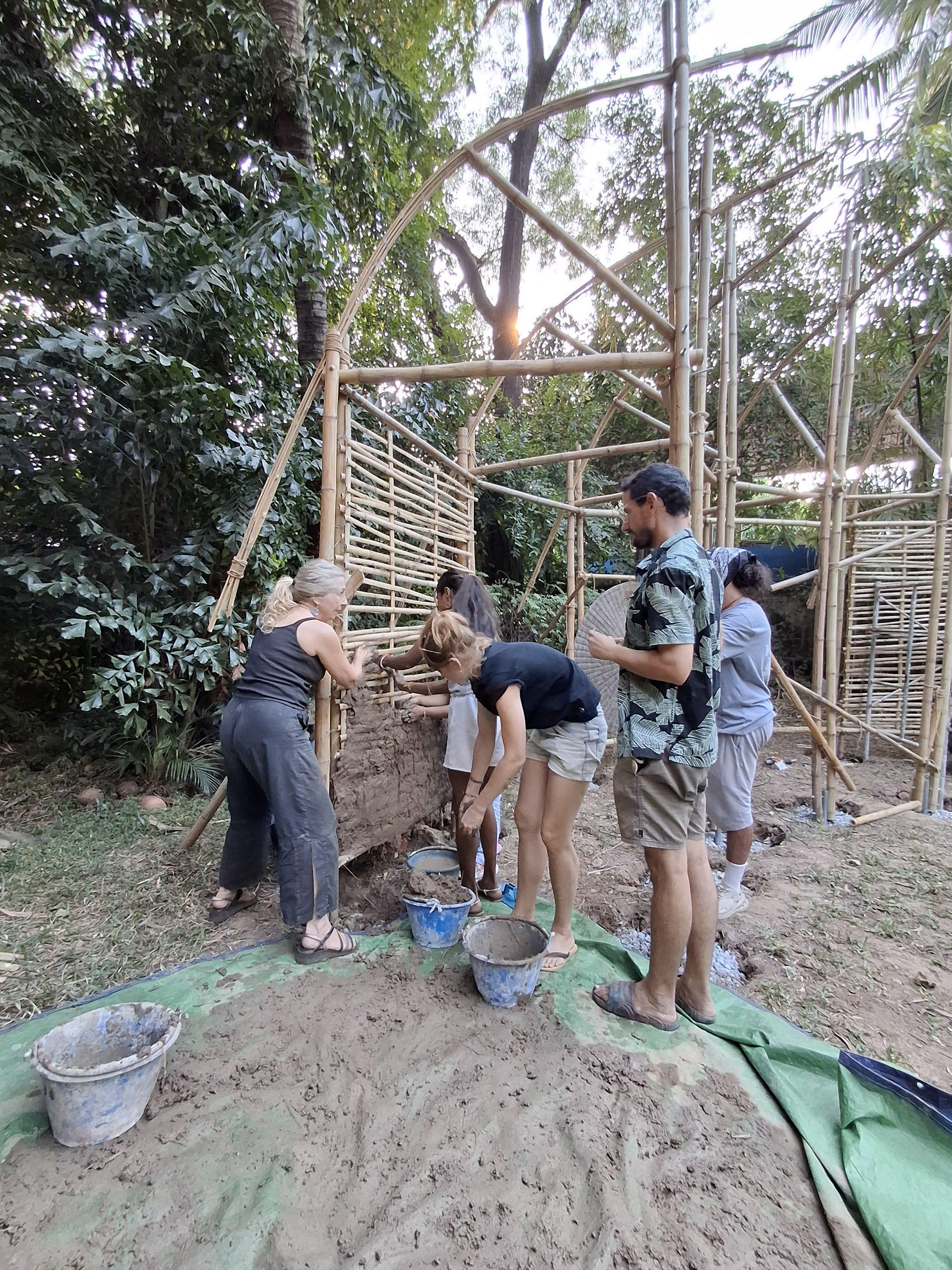
Guiding this community throughout the process was both refreshing and deeply meaningful for me. It reminded me how thirsty we humans are for genuine community, for outdoor collective experiences, and for learning by doing — using both our bodies and our minds. The project became not only a pavilion, but a space of encounter, exchange, and reconnection.