A participatory eco-tourism project protecting wildlife and empowering communities
Status: Completed
Location: Northern Plains, Cambodia
Year: 2015
Client: Wildlife Conservation Society (WCS) and the Sam Veasna Center (SVC).
Scope of service: Design & Build
Location: Northern Plains, Cambodia
Year: 2015
Client: Wildlife Conservation Society (WCS) and the Sam Veasna Center (SVC).
Scope of service: Design & Build
Located in the remote Northern Plains of Cambodia, Tmat Boey is a pioneering community-based eco-tourism model developed in collaboration with the Wildlife Conservation Society (WCS) and the Sam Veasna Center (SVC).
The initiative supports villagers who protect their forests and biodiversity in return for a stable livelihood linked to eco-tourism rather than the extraction of natural resources.
The initiative supports villagers who protect their forests and biodiversity in return for a stable livelihood linked to eco-tourism rather than the extraction of natural resources.
The eco-lodge was conceived as a catalyst: a place where visitors can experience one of the last refuges of critically endangered bird species, while directly supporting the people who safeguard this fragile ecosystem.
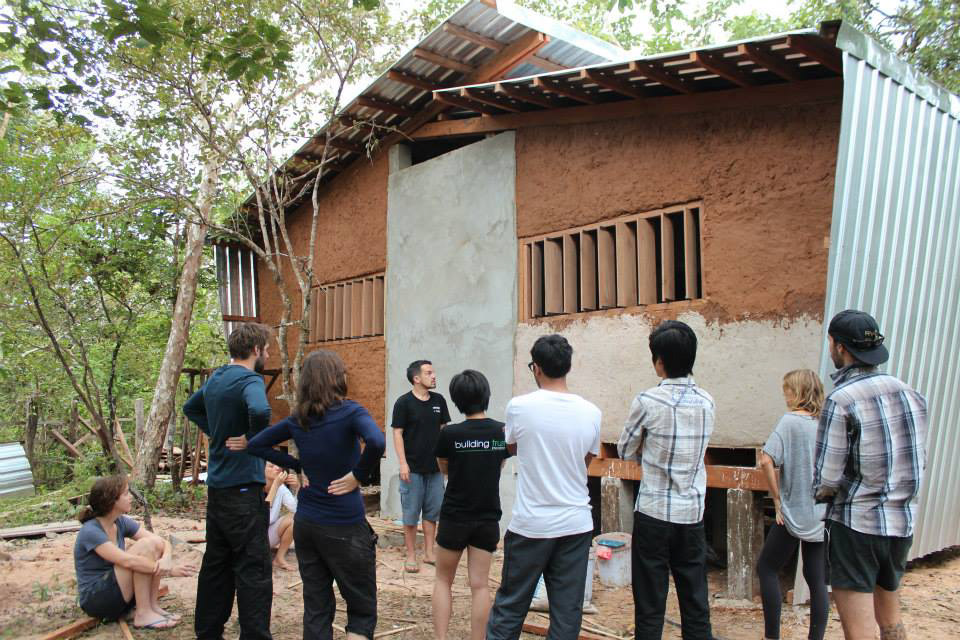
A Participatory & Community-Led Design Approach
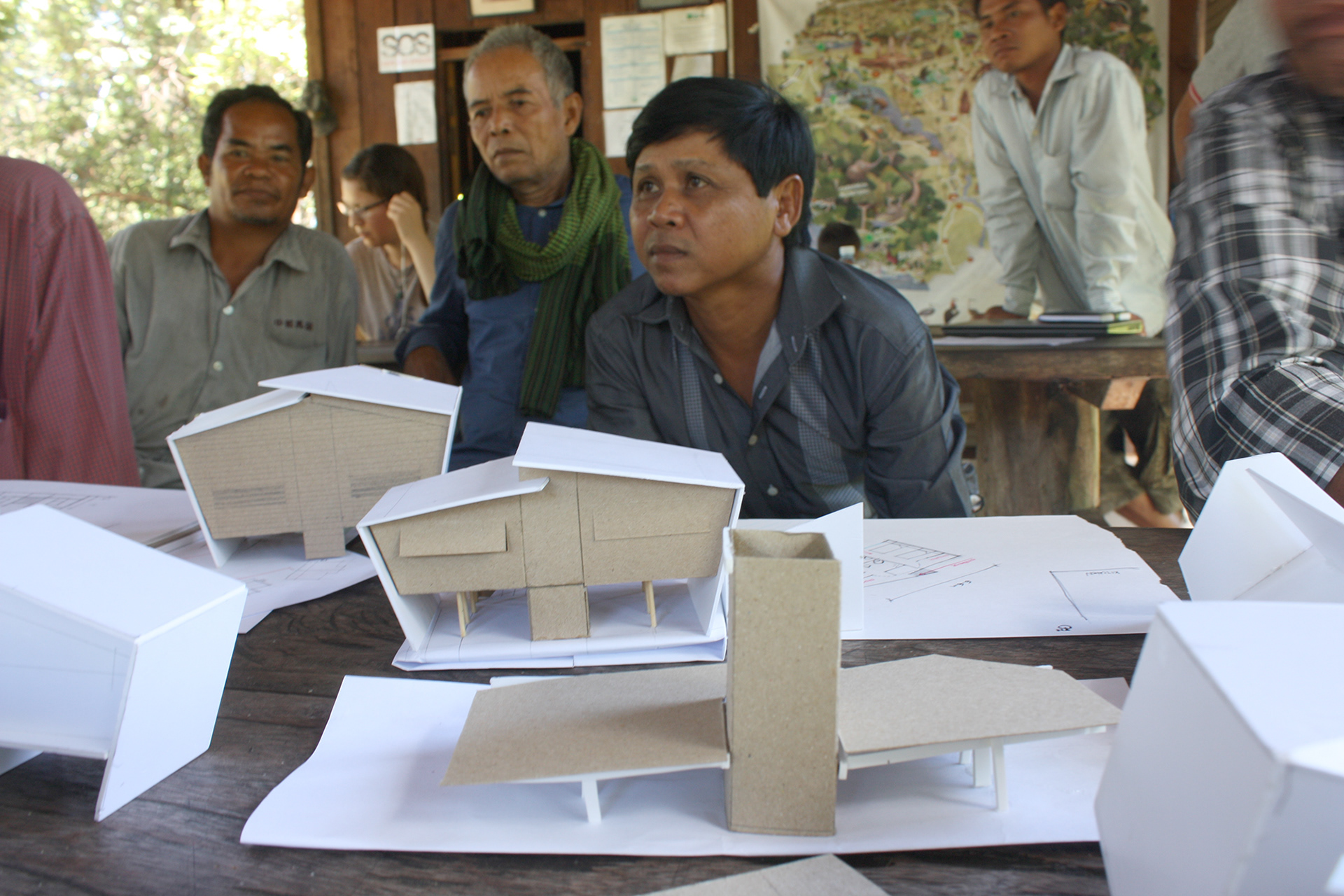
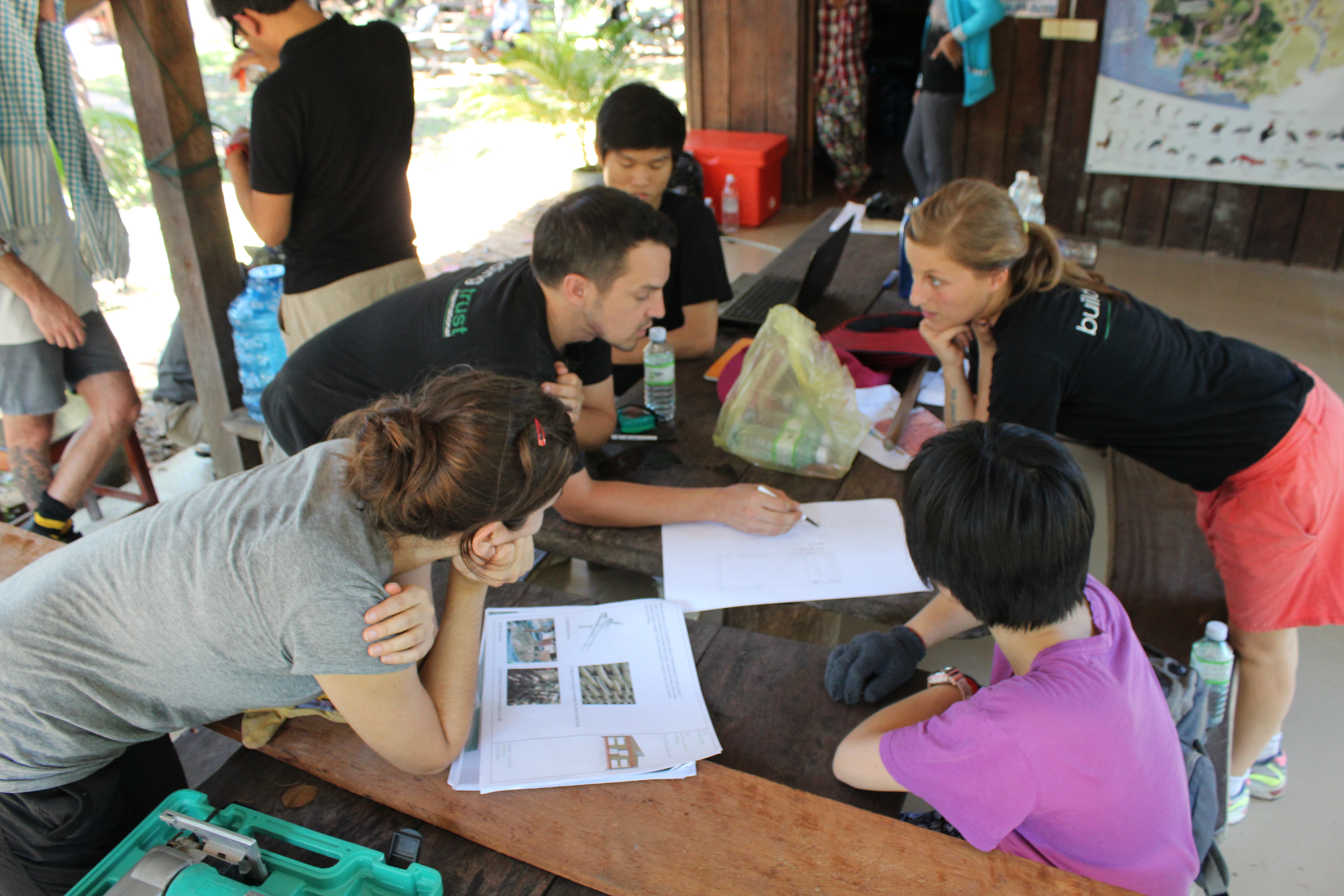
The project was developed through a participatory process, engaging local villagers, craftsmen, international volunteers, and conservation partners. Workshops and community meetings shaped the design at every stage:
- mapping local needs and aspirations
- co-creating functional arrangements for the lodge and communal areas
- integrating traditional knowledge of climate, materials, and construction
- ensuring that decisions remained in the hands of the community
This method fostered a strong sense of ownership, essential for long-term maintenance and stewardship.
“Any project should strive to use as many locally sourced materials as possible to ensure the project is sustainable.”
This principle guided the entire design and construction process.
This principle guided the entire design and construction process.
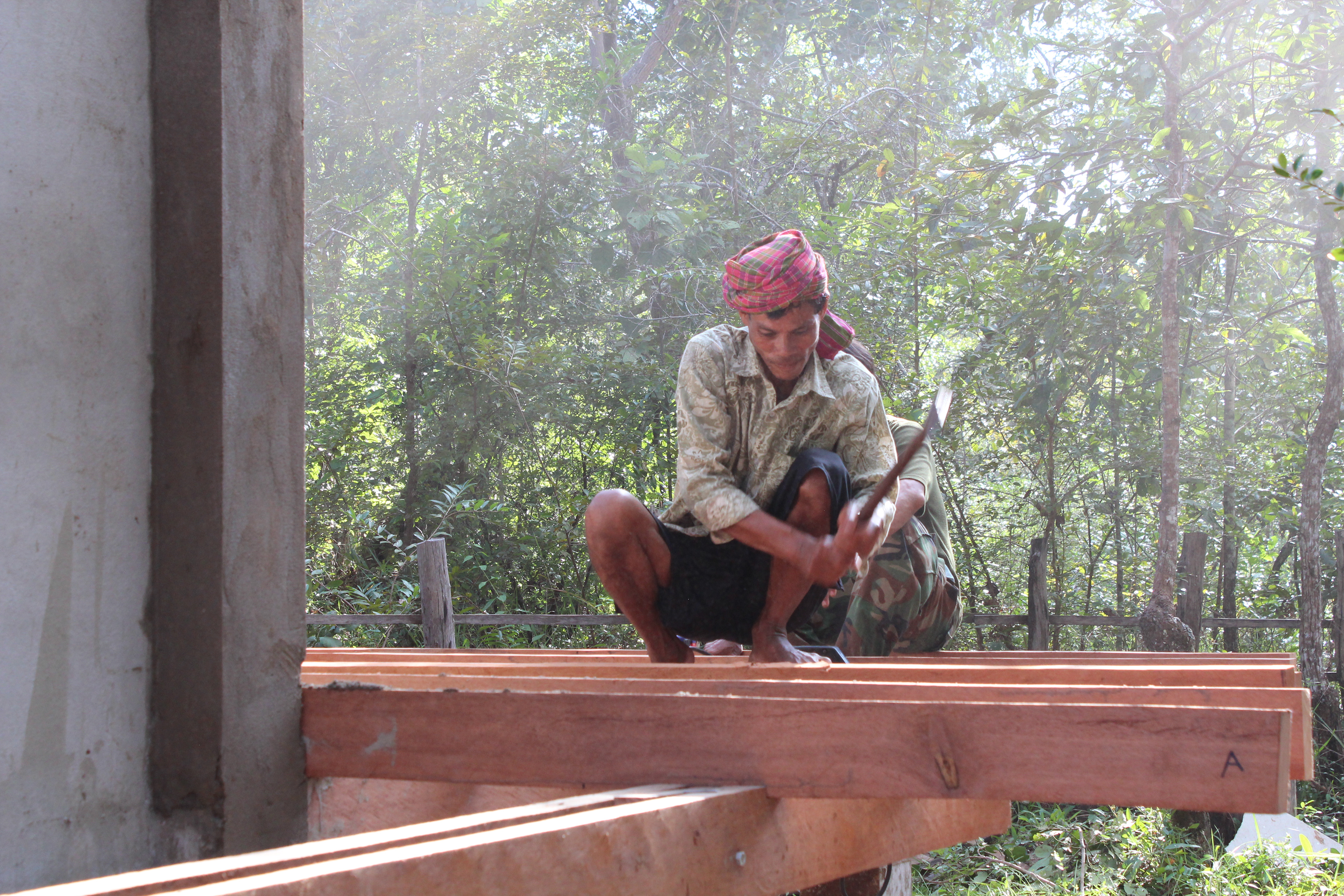
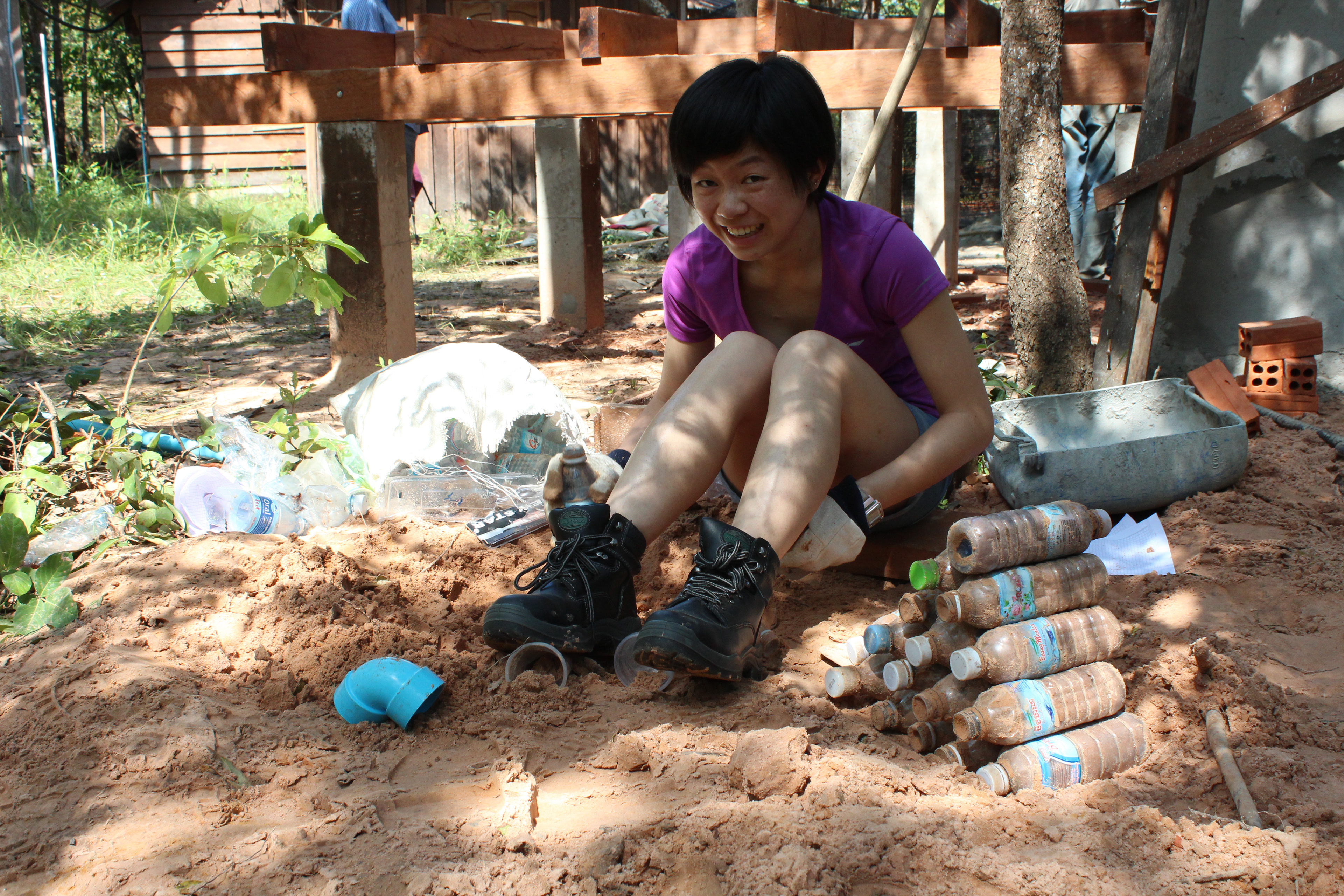
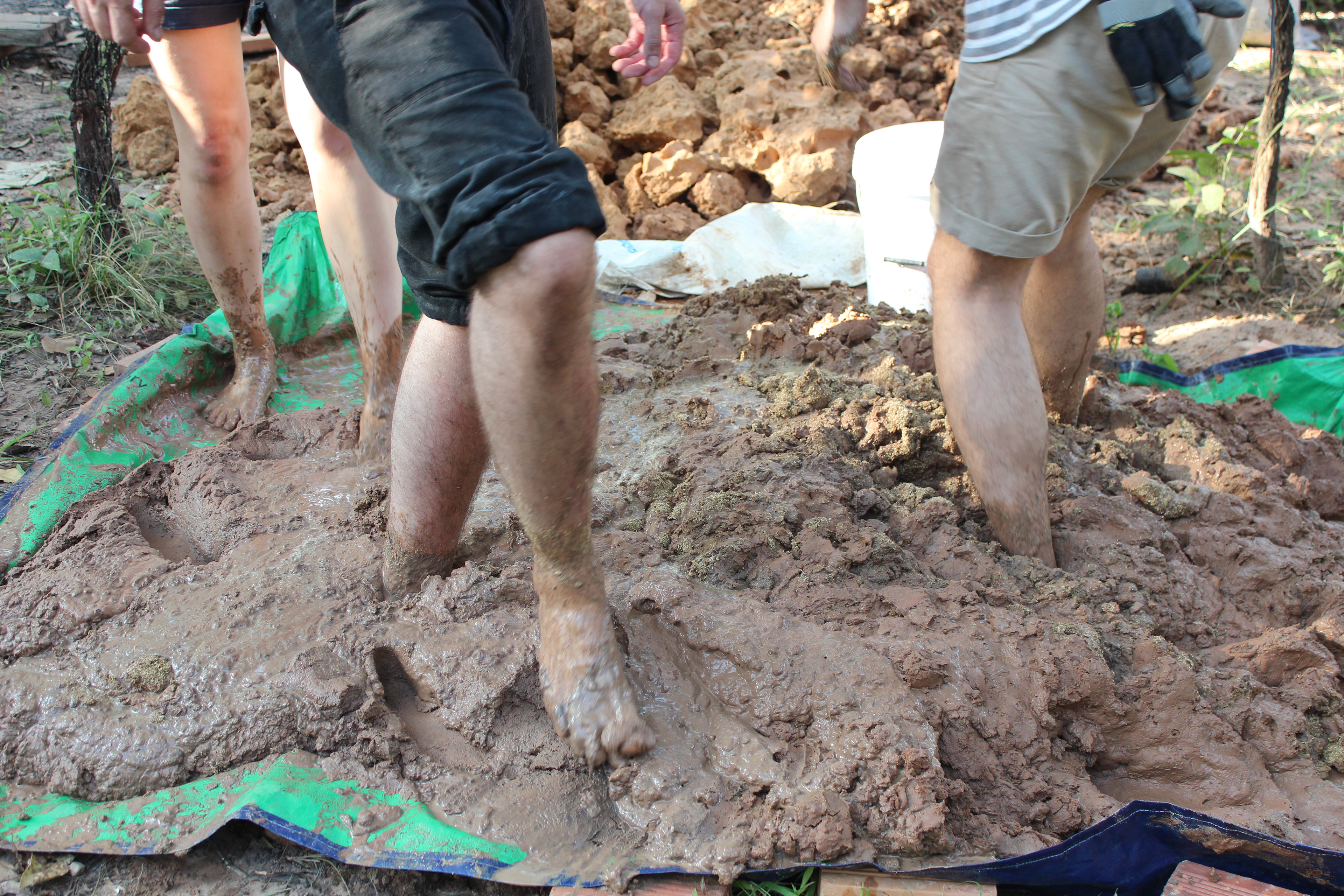
Using Local Materials & Vernacular Techniques
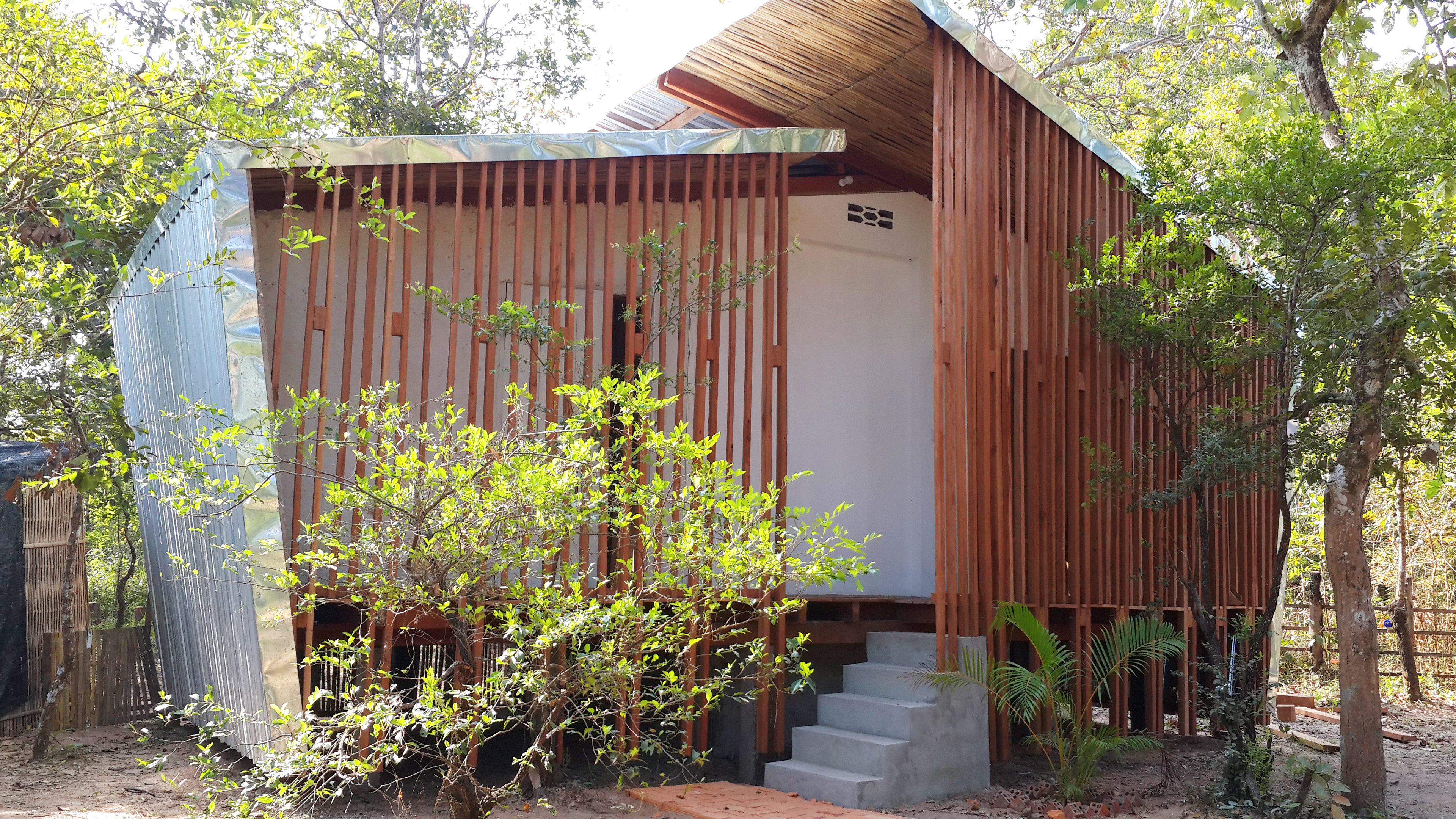
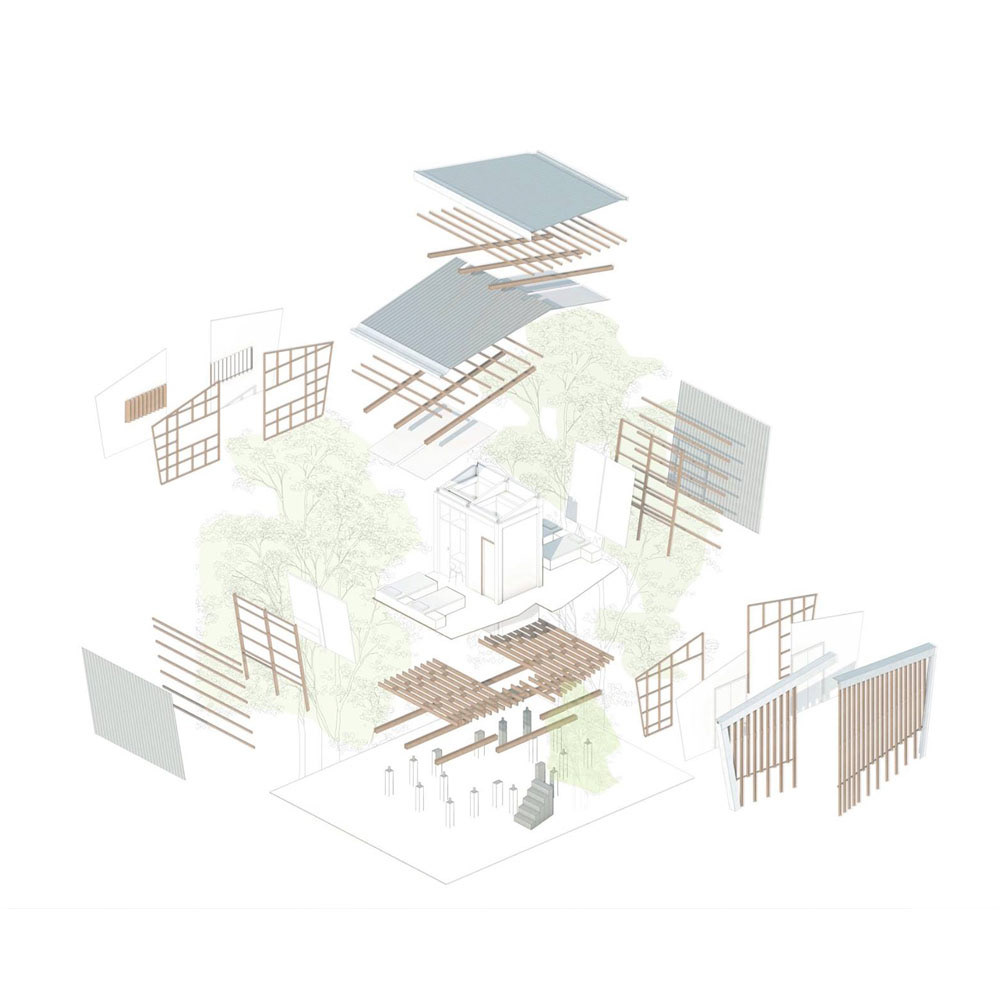
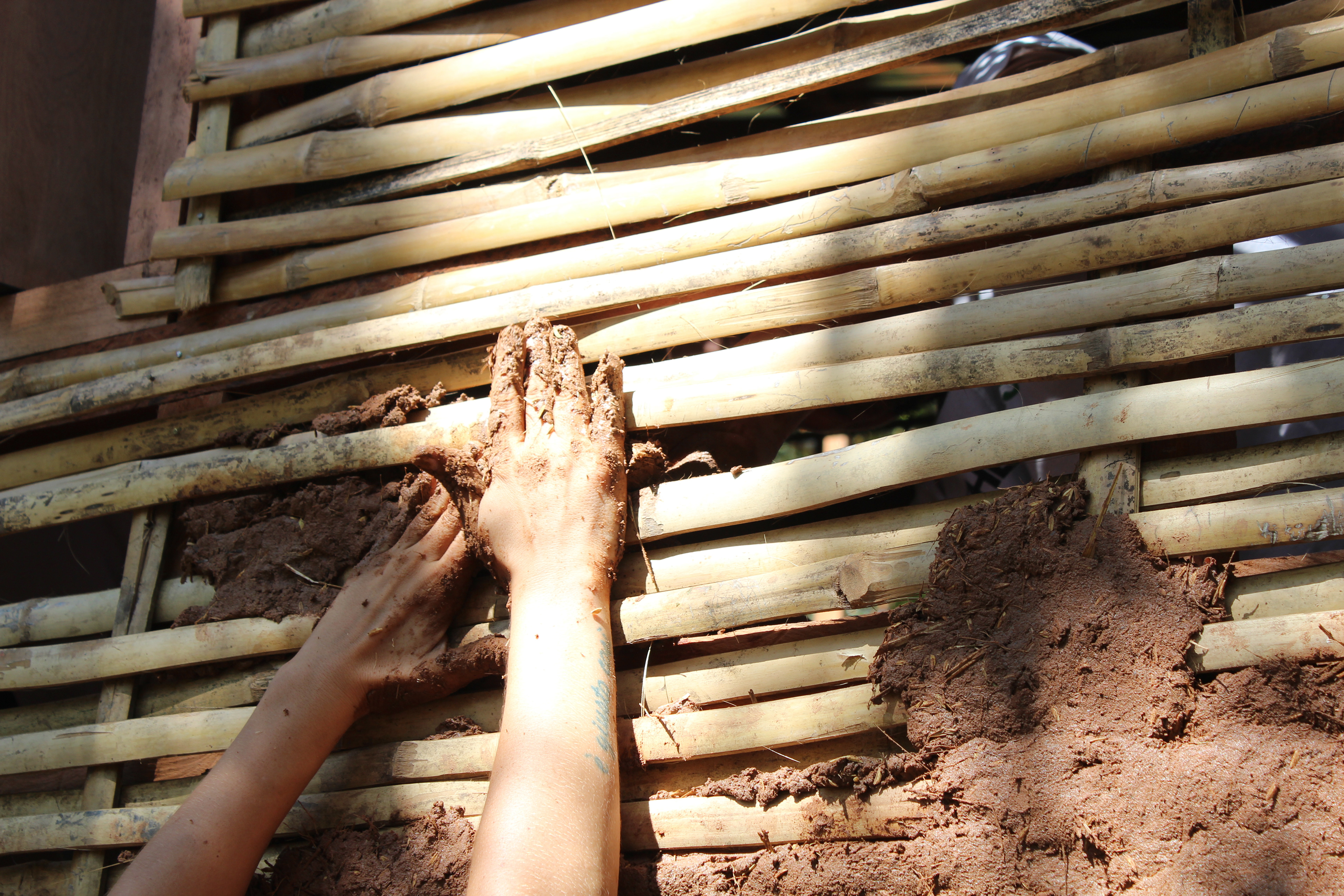
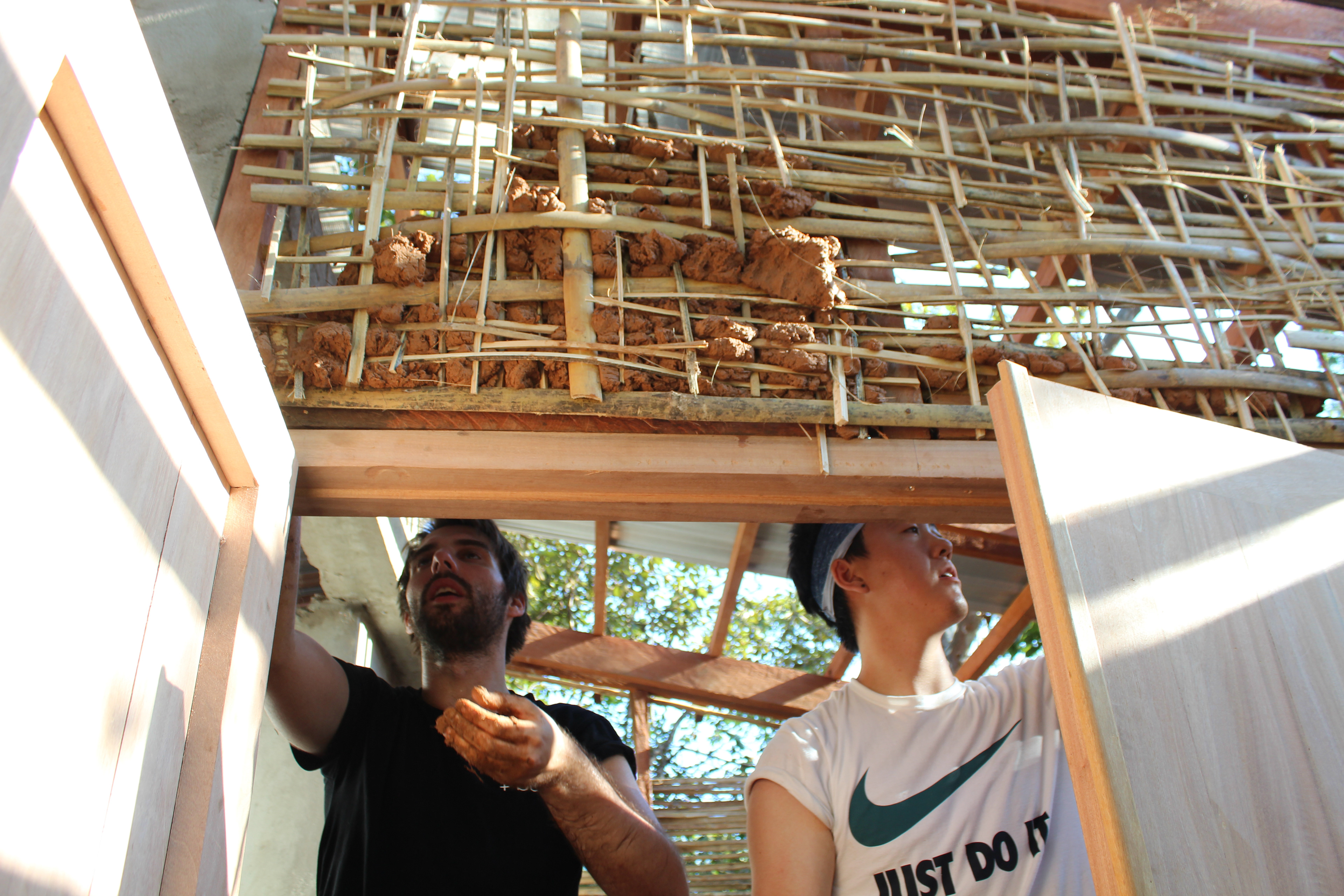
The eco-lodge takes inspiration from the vernacular architecture of rural Cambodia, where simplicity, climate-sensitivity and frugality define everyday construction. Key material strategies:
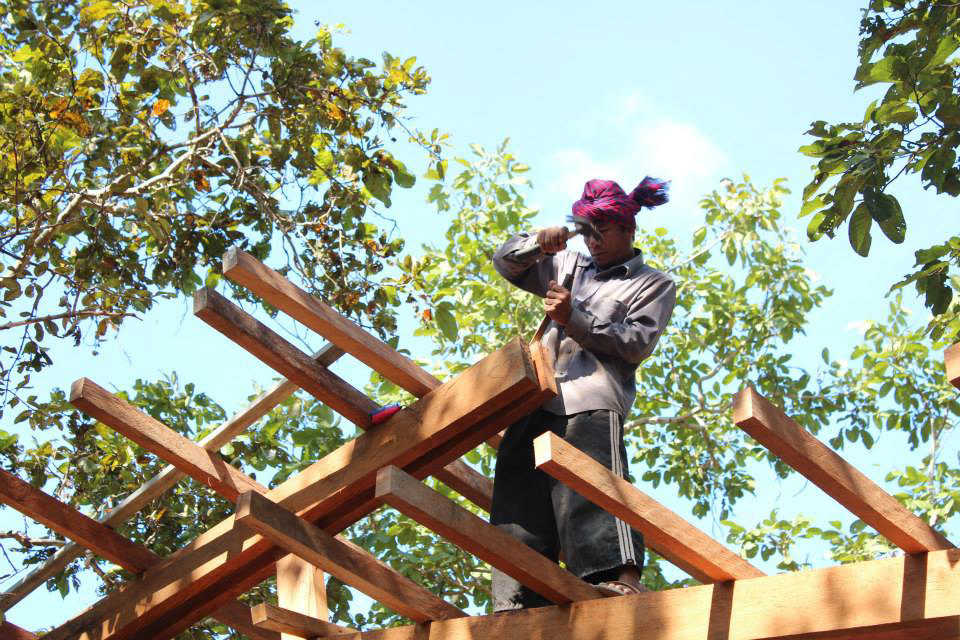
- Local timber harvested responsibly and processed by village carpenters
- Bamboo and lightweight natural fibers for shading and transitions
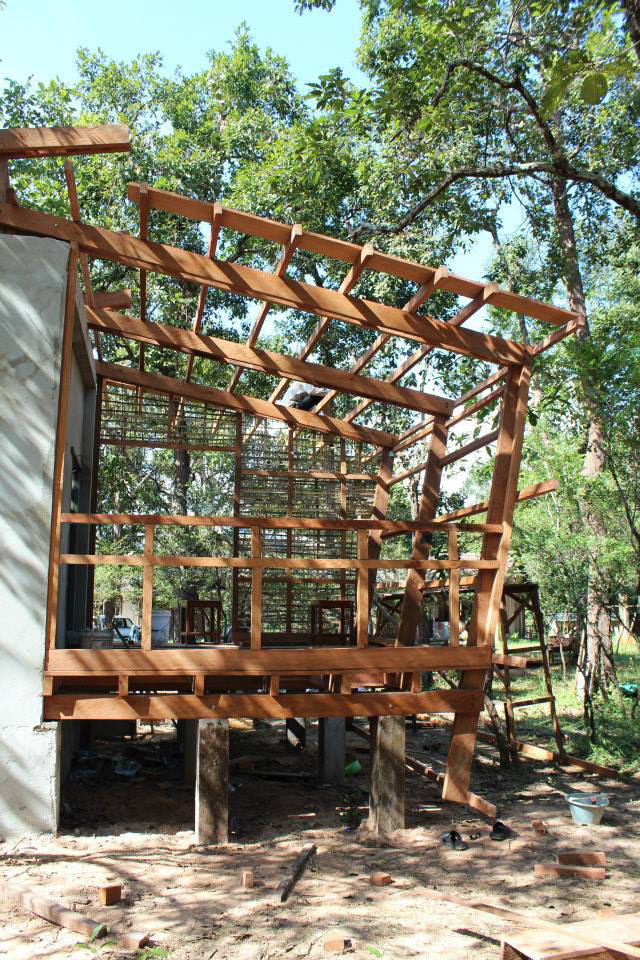
- Timber stilt construction ensuring ventilation, flood resilience and minimal land impact
- Passive cooling strategies that maximise shading, air movement and orientation
These choices reduced environmental impact while enhancing comfort in the hot, humid climate of the plains.
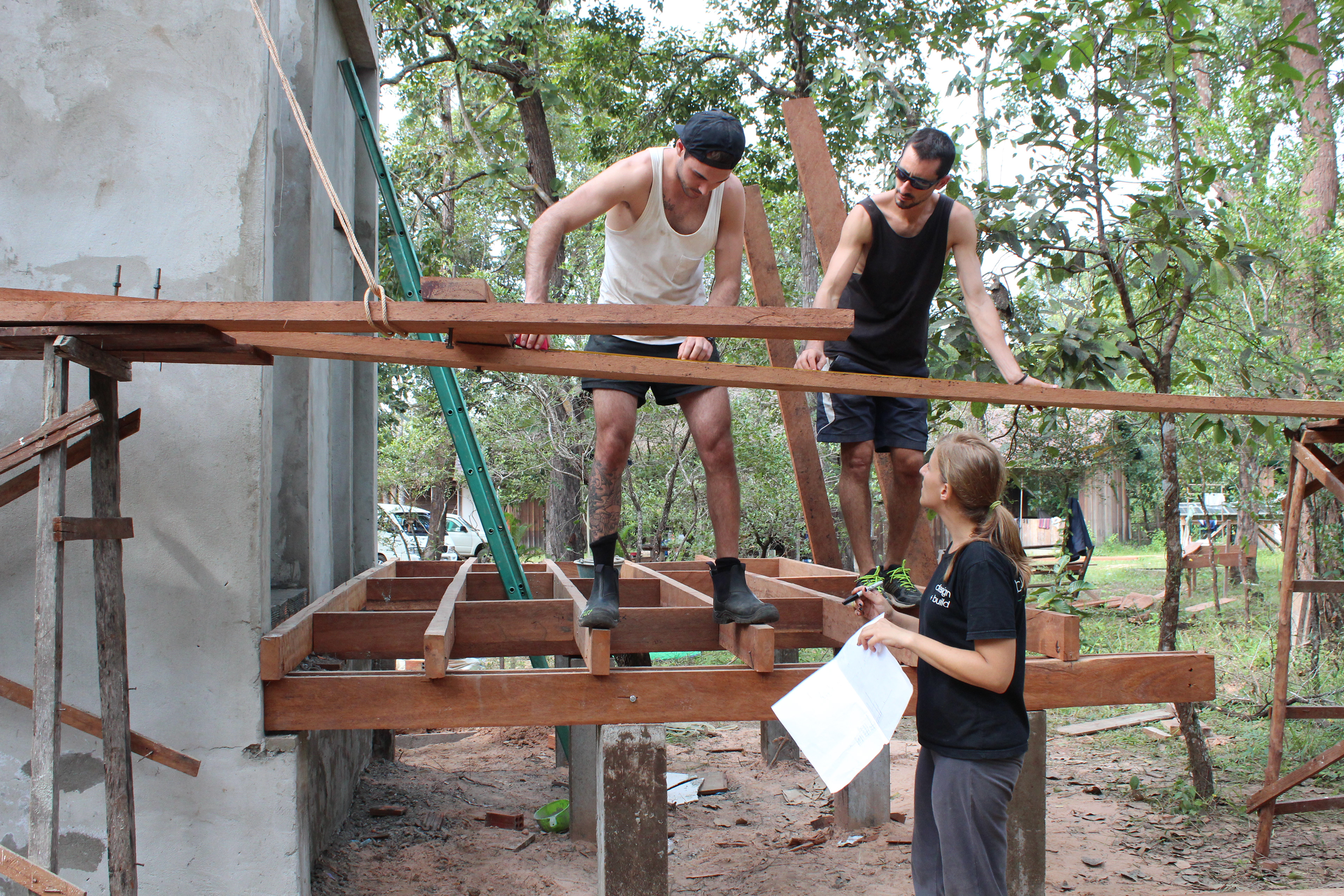
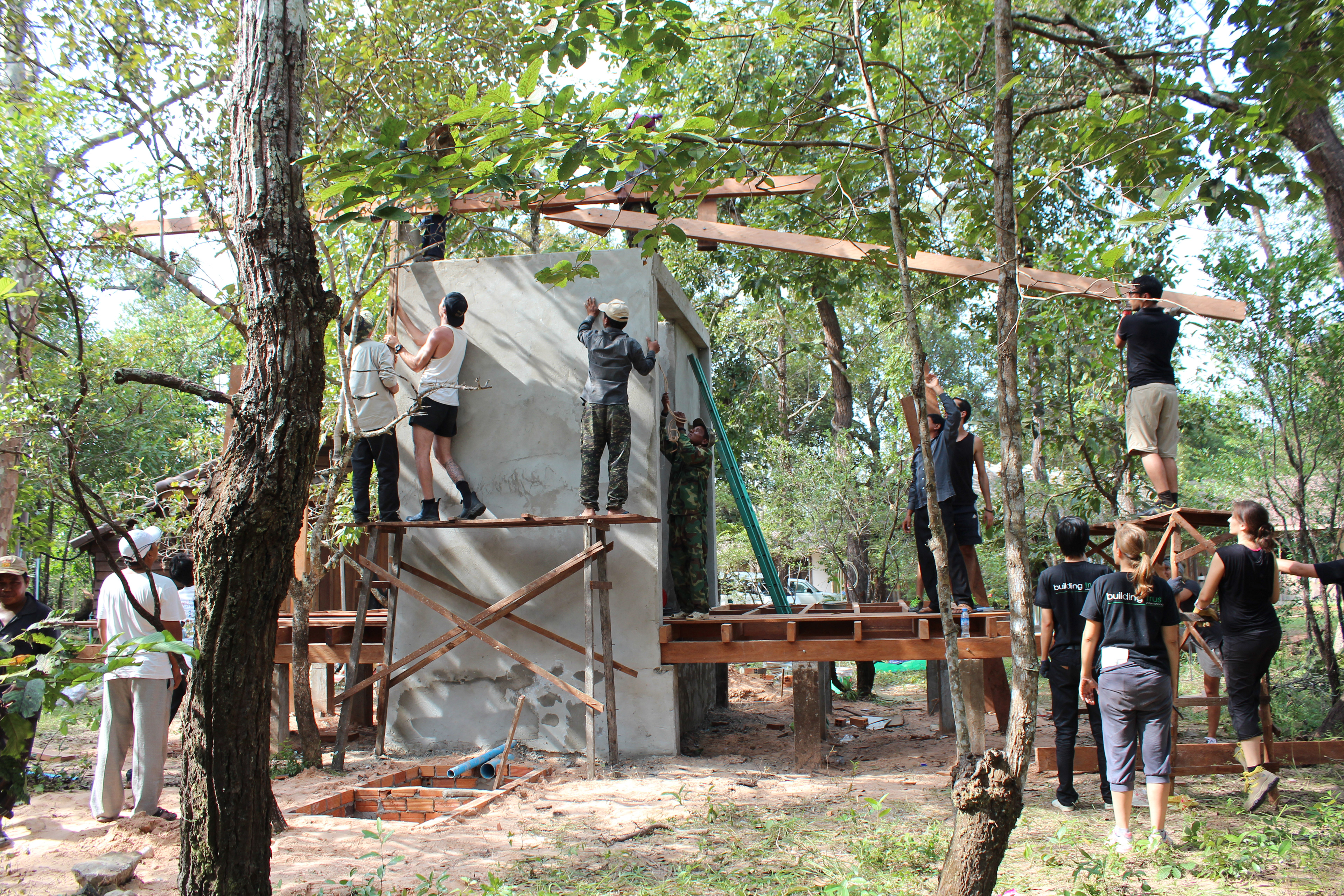
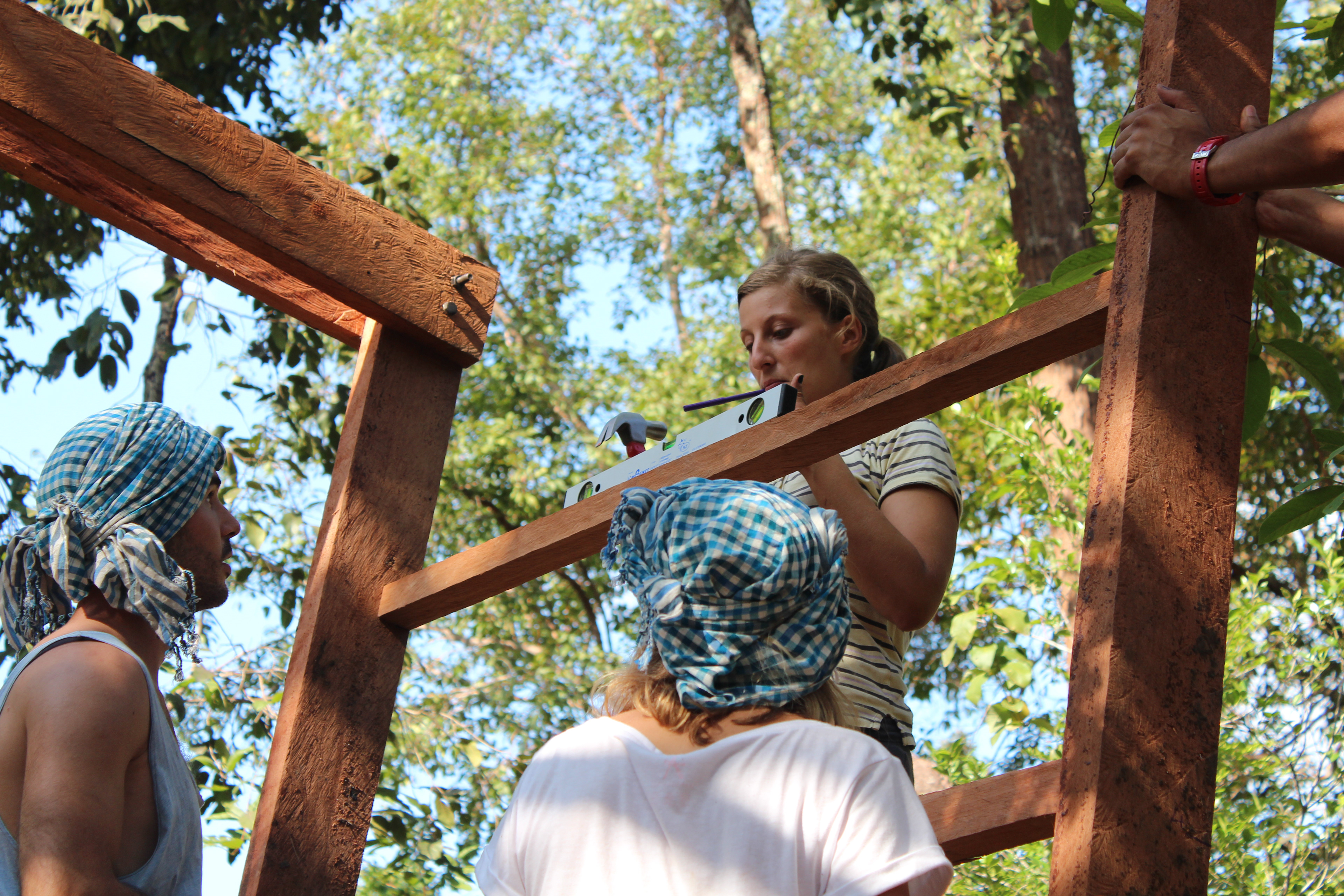
Construction as a Collective Process
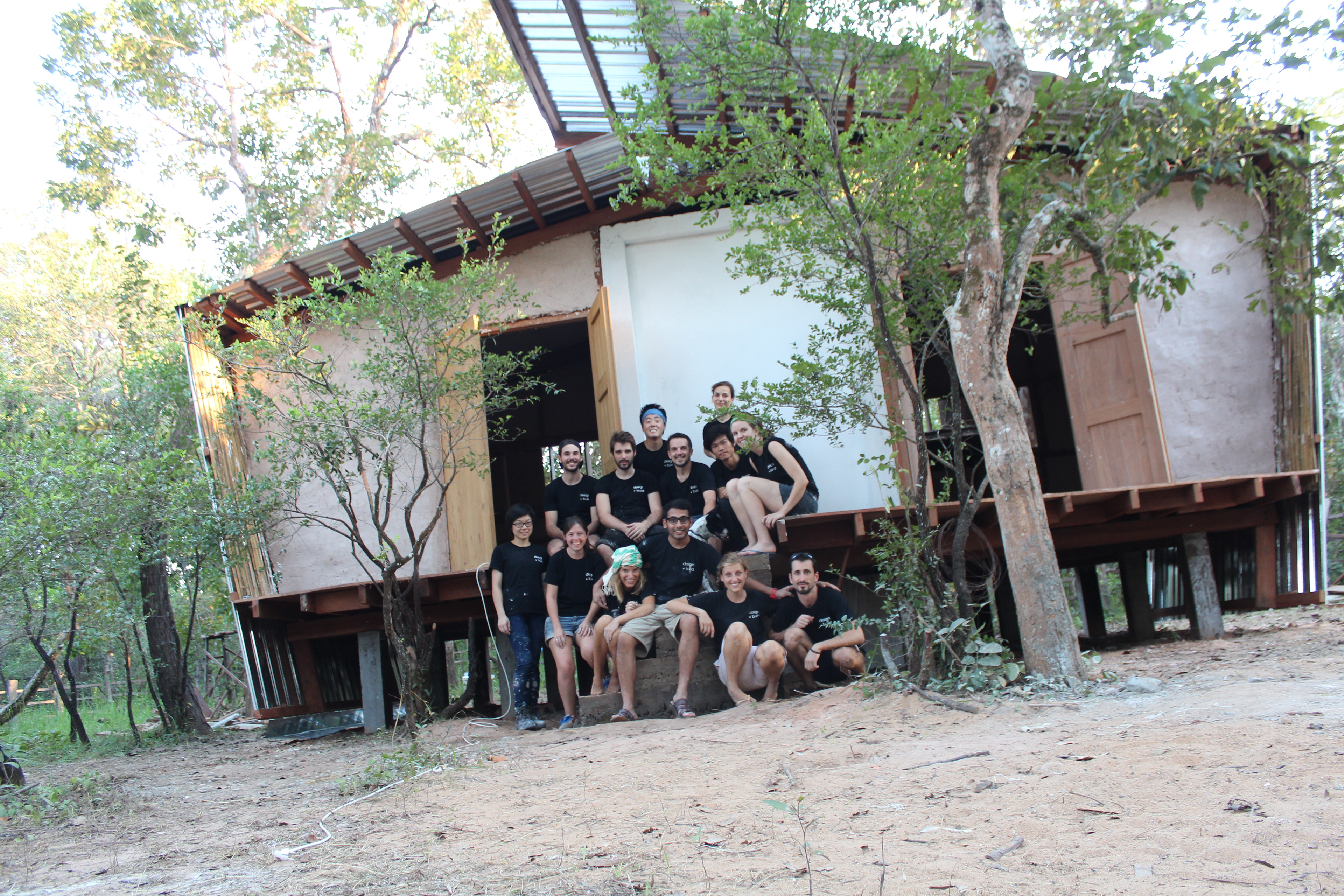
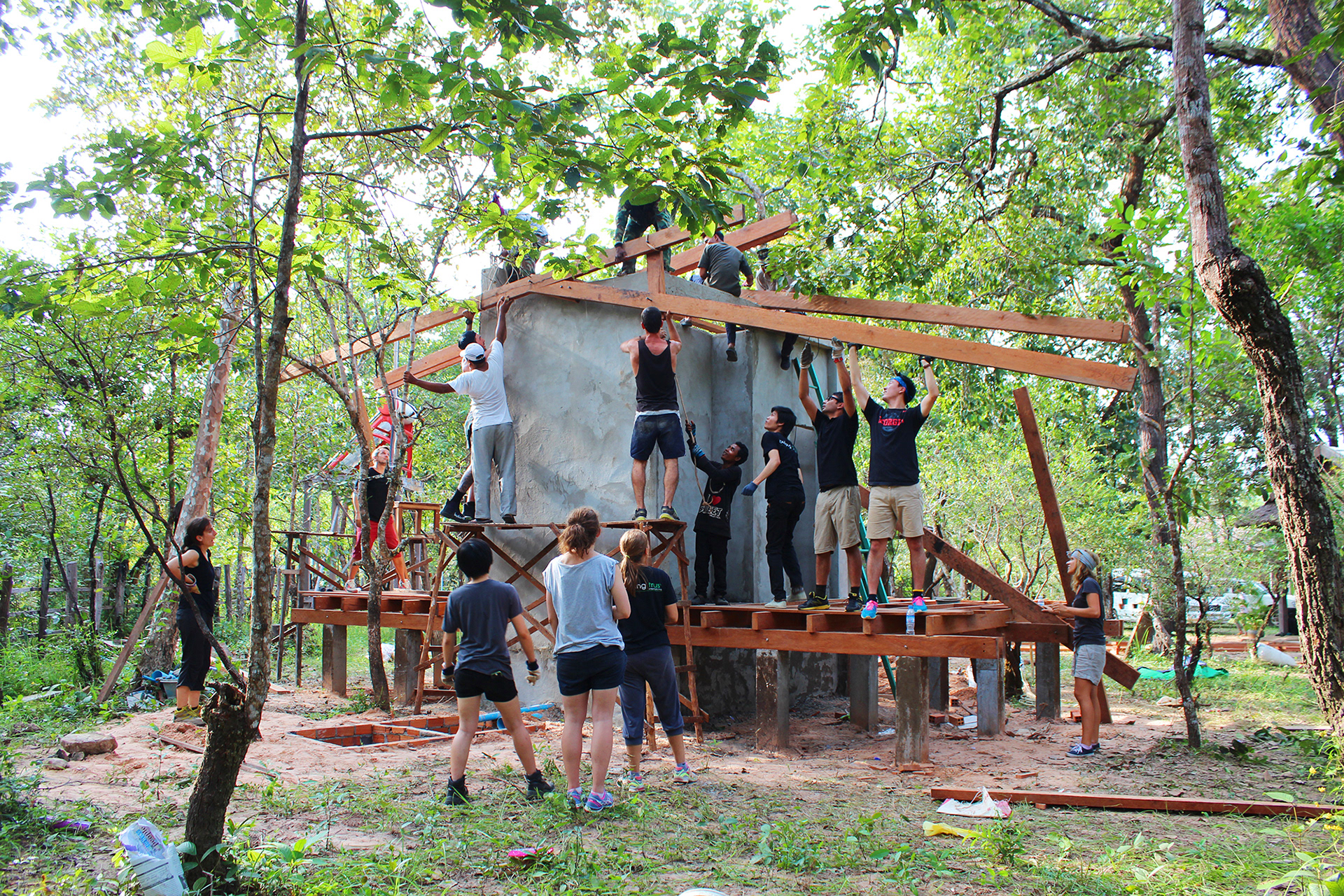
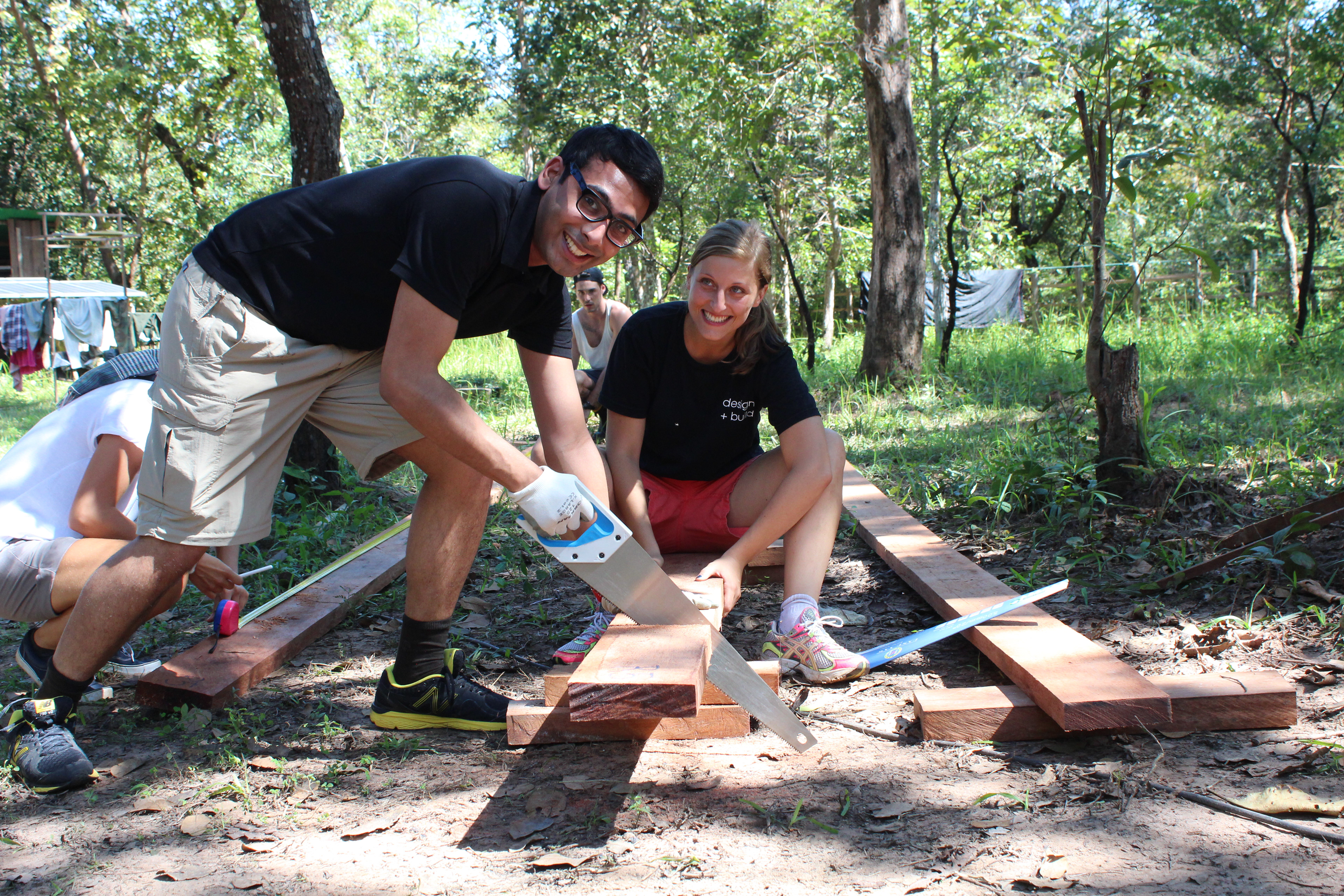
Construction became a hands-on collaboration.
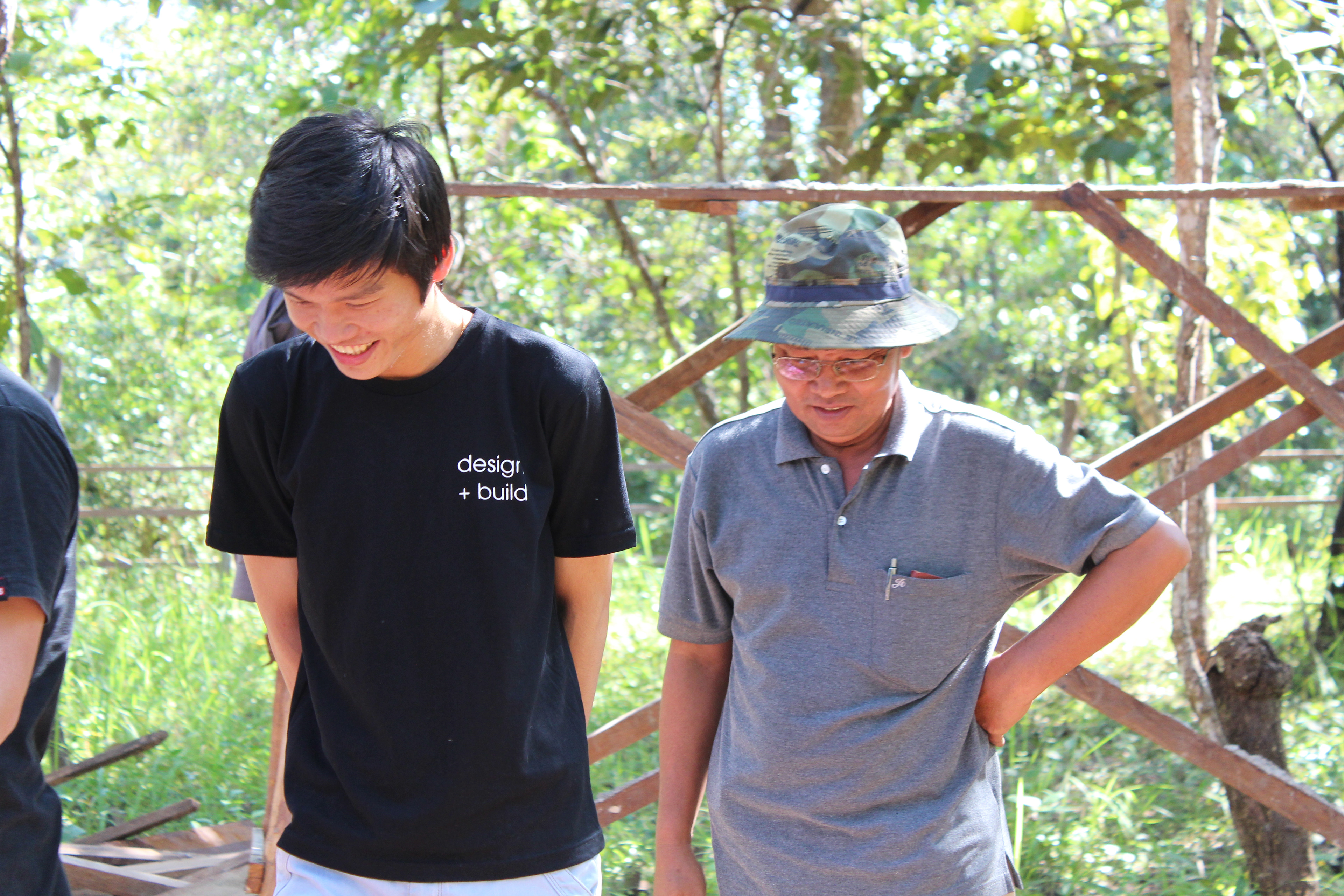
Villagers, youth, and international volunteers worked side-by-side, exchanging skills and reinforcing community pride. Activities included:
Villagers, youth, and international volunteers worked side-by-side, exchanging skills and reinforcing community pride. Activities included:
- joint construction of the lodge structures
- on-site carpentry and joinery
- testing and adapting details with local materials
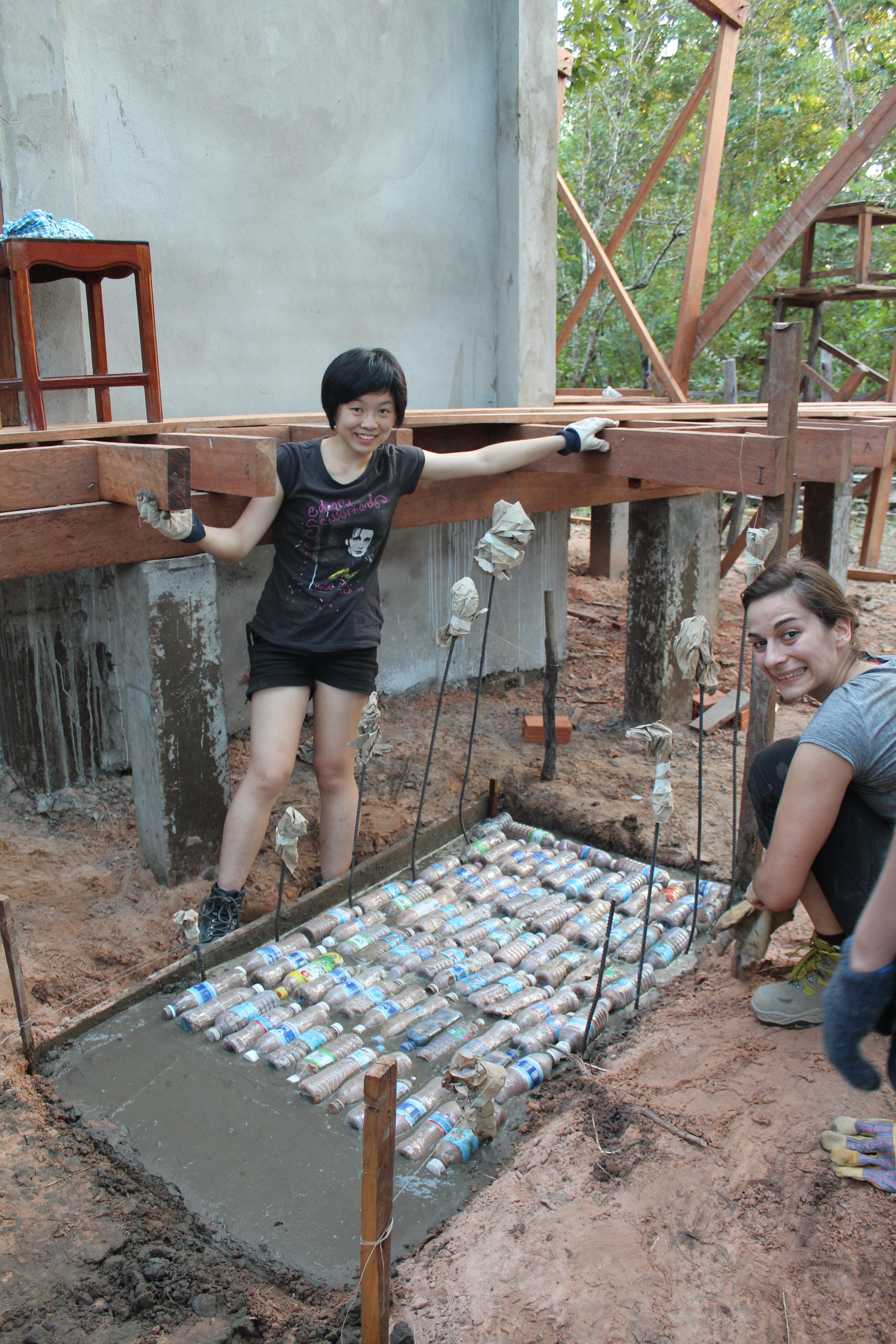
- developing low-impact foundations and roofing solutions
This collective effort ensured that the community would be able to maintain, repair, and replicate the structures independently in the future.
Impact & Legacy
The eco-lodge has become a model for conservation-linked community development in Cambodia:
- Increased household income tied directly to wildlife protection
- Reduced forest exploitation, as tourism revenue replaces hunting and timber harvesting
- Strengthened community governance through active participation
- Empowerment of local craftsmen and intergenerational skill sharing
- A replicable system now inspiring similar projects across the country
Through architecture, education, and shared ownership, Tmat Boey demonstrates how built environment design can support biodiversity, livelihoods, and long-term stewardship.